Catch shares leave fishermen reeling
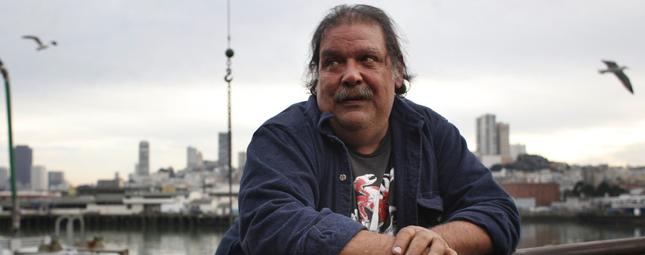 SAN FRANCISCO – For centuries, men like Larry Collins, a garrulous crab and sole fisherman, were free to harvest the seas.But sweeping across the globe is a system that slowly and steadily hands over a $400 billion ocean fishing industry to corporations. The system, called catch shares, in most cases favors large fishing fleets, a review of the systems operating across the United States shows.“We’ve been frozen out,” said Collins, who docks near the Golden Gate Bridge. “This system has given it all to the big guys.”http://www.youtube.com/watch?feature=player_embedded&v=Sf5GlGDD40MMore and more wild-caught fish species and fishing territories in the United States are managed under catch shares, which work by providing harvesting or access rights to fishermen. These rights – worth tens of billions of dollars in the United States alone – are translated into a percentage, or share, that can then be divided, traded, sold, bought or leveraged for financing, just like any asset.Catch shares have been backed by an alliance of conservative, free-market advocates and environmental groups, some of which have financed scientific studies promoting the merits of the system, the Center for Investigative Reporting has found.Read the full story here.
Study Finds Climate Change To Open Arctic Sea Routes By 2050
 Climate change will make commercial shipping possible from North America to Russia or Asia over the North Pole by the middle of the century, a new study says.Two researchers at the University of California ran seven different climate models simulating two classes of vessels to see if they could make a relatively ice-free passage through the Arctic Ocean. In each case, the sea routes are sufficiently clear after 2049, they say.The study, published Monday in the journal PNAS by Laurence C. Smith and Scott R. Stephenson, found that the sea ice will become thin enough that a "corridor directly over the north pole" will open up. "The shortest great circle route thus becomes feasible, for ships with moderate ice-breaking capability."Read the full story here http://www.youtube.com/watch?feature=player_embedded&v=eIZTMVNBjc4For information about Chasing Ice
Wild Fisheries Are Sustainable by Law

 If your seafood is coming from a United States fishery, it is, by law, coming from a sustainable fishery.
Wild fisheries in U.S. territorial waters are governed by the Magnuson-Stevens Fishery Conservation and Management Act. This act contains strict requirements for conservation and sustainability that essentially mandate no fish stock be subjected to overfishing. The overfishing limit is strictly defined. It is not only precautionary, but is a level that allows fish stocks to rebuild to the maximum sustainable yield level over time.In 1996, federal lawmakers adopted the Sustainable Fisheries Act as a substantial amendment to Magnuson-Stevens. It is perhaps the most aggressive conservation law currently in place in the world. Essentially, it requires that all fish stocks be evaluated for their status relative to what is believed to be their fully rebuilt potential. If a stock is believed to be below 50 percent of the rebuilt goal, fishery managers are required to initiate a rebuilding plan that reduces fish mortality to a level that will allow the stock to be fully rebuilt in 10 years or less.The read the full New York Times article here
Oceana Overstates Mislabeled Fish Problem

By now, we all know that the fish we buy has about a one in three chance of being something other than what's on the label.Just how much should we care?We can all agree that, in a perfect world, fish would be labeled accurately, but Oceana, an advocacy organization devoted to "protecting the world's oceans," and the latest to test fish samples, would have us believe the mislabeling problem is dire, dire, dire:"As our results demonstrate, a high level of mislabeling nationwide indicates that seafood fraud harms not only the consumer's pocket book, but also every honest vendor or fisherman along the supply chain. These fraudulent practices also carry potentially serious concerns for the health of consumers, and for the health of our oceans and vulnerable fish populations."But dig into the report, and it's hard to find evidence for most of those claims.Read the complete story from Huffington Post here.
Does catch reflect abundance?
http://youtu.be/AG-7k2XJVe4
Researchers are divided over the wisdom of using estimates of the amount offish hauled in each year to assess the health of fisheries.
Read the full story here.
Sublime spots for sardines

Be the envy of every dolphin, get yourself a beautiful plate of sardines.
Typically used for bait, these little treats take to Mediterranean flavors so well. And if you’re not up for rowing out to buy direct from a bait barge in the bay (umm, that's illegal), you can paddle over to a few San Diego restaurants making headway on the sardine trend:
What’s the big appeal of sardines? “They taste like fish,” said Trey Foshee, who has served the tiny, oily fish a trillion ways at George's at the Cove/George’s California Modern. “A lot of fish that’s found in restaurants—the halibuts, the soles, a lot of white fish—they’re geared for people who think eating fish is healthy but they don’t like the taste of fish.” His La Jolla kitchen is currently grilling sardines, plating the filets atop fennel cream, marinated mussels, Japanese squid and wild fennel, and presenting the dish underneath a glass filled with cedar smoke. 1250 Prospect St. La Jolla. (858) 454-4244 orgeorgesatthecove.com.
One of the top “boat-to-throat” sustainable-seafood advocates in town is Sea Rocket Bistro, a two-roomed, low-key neighborhood spot. The kitchen leaders have changed since it opened in 2008—Tommy Fraioli is the captain now, and he recently won the San Diego Bay Wine & Food Festival’s Chef of the Fest title. But the San Diego-caught sardines stay on the menu: Find them with a bit of heat-coloring and smoke from their time on the grill. They're served with their head-on, and festooned with a cucumber and tomato salad with vinegar, lemon, paprika and pickled shallots. 3382 30th St. North Park. (619) 255-7049 or searocketbistro.com.Read the whole story here
Major climate changes looming
 Washington -- In his inaugural address last Monday, President Obama made climate change a priority of his second term. It might be too late.Within the lifetimes of today's children, scientists say, the climate could reach a state unknown in civilization.In that time, global carbon dioxide emissions from burning fossil fuels are on track to exceed the limits that scientists believe could prevent catastrophic warming. CO{-2} levels are higher than they have been in 15 million years.The Arctic, melting rapidly and probably irreversibly, has reached a state that the Vikings would not recognize."We are poised right at the edge of some very major changes on Earth," said Anthony Barnosky, a UC Berkeley professor of biology who studies the interaction of climate change with population growth and land use. "We really are a geological force that's changing the planet." Read more here
Rebuilding Crescent City Harbor
http://vimeo.com/53470108Crescent City is rebuilding its harbor following the devastating 2011 tsunami. RCAC’s short-term $3.7 million gap loan and $8.1 million revolving line of credit keep the project afloat between federal and state disaster funding disbursements.Repairing the harbor, a major commercial fishing port for both Del Norte County and Northern California, is urgent in a county with 13.5 percent unemployment and a median household income of $20,133. Two hundred jobs depend directly on harbor facilities, and another 100 jobs indirectly. RCAC financing is critical to restoring the local fishing and tourism industries.--Produced and Edited by Jeremy RaffMusic by Zacharias Flynn