
NOAA Finds West Coast's Massive Domoic Acid Bloom is Among Most Toxic Ever Recorded
— Posted with permission of SEAFOODNEWS.COM. Please do not republish without their permission. —
 SEAFOODNEWS.COM [Phys Org] by Hannah Hickey and Michelle Ma - June 26, 2015
The bloom that began earlier this year and shut down several shellfish fisheries along the West Coast has grown into the largest and most severe in at least a decade.UW research analyst Anthony Odell left June 15 from Newport, Oregon, aboard the National Oceanic and Atmospheric Administration's research vessel Bell M. Shimada. He is part of a NOAA-led team of harmful algae experts who are surveying the extent of the patch and searching for "hot spots"—swirling eddies where previous research from the UW and NOAA shows the algae can grow and become toxic to marine animals and humans."The current bloom of Pseudo-nitzschia spp., the diatom responsible for domoic acid and amnesic shellfish poisoning, appears to be the biggest spatially we have ever observed," Odell said. "It has also lasted for an incredibly long time—months, instead of the usual week or two."Odell is the coastal sampling coordinator at the UW's Olympic Natural Resources Center in Forks, Washington, part of the UW College of the Environment. From his base in Hoquiam, Odell samples shellfish, phytoplankton and water quality, and responds to toxic algae bloom events along Washington's outer coast.Now he is doing toxin sampling on the three-week first leg of the NOAA voyage, from San Diego to San Francisco. Three more legs will continue through mid-September, surveying up to the north end of Vancouver Island.The first samples collected from near San Diego were fairly clean, Odell said, suggesting they were still south of the patch. More recent samples collected this week from near Santa Barbara showed the first signs of the harmful algae. The massive bloom is known to extend at least from central California to Vancouver Island, with reports coming from as far north as Alaska.As the ship travels north it is making a large back-and-forth grid, sampling the water from very near shore to several miles offshore. NOAA scientists initially scheduled the cruise to survey sardine and hake. Researchers from the UW, NOAA and other partners were invited to join and use the opportunity to conduct a large-scale sampling for marine toxins.The bloom includes some of the highest toxin levels ever recorded in Monterey Bay, California, and along the central Oregon coast. All of Washington's razor clamming beaches are currently closed, and the southern coast of Washington has the largest-ever closure of our state's Dungeness crab fishery.For the past 12 years, Odell has been a research analyst for the UW-led Olympic Region Harmful Algal Bloom Partnership. The organization provides monitoring data and other information about toxic algae blooms to coastal communities on Washington's Olympic Peninsula.The UW's Washington Sea Grant is involved in a similar monitoring effort for Puget Sound, SoundToxins, which has some 50 volunteers monitor 33 sites weekly throughout the sound.The massive bloom that emerged this spring comes after a few relatively quiet years. While the phenomenon is natural and cannot be prevented, better knowledge could help to predict and prepare for its effects.In recent years, UW oceanographers including Barbara Hickey and Ryan McCabe sampled coastal waters to help identify the origin of toxic Pseudo-nitzschia cells on the Washington and Oregon coasts. The studies resulted in the development of computer models that can simulate how the blooms travel.
Researchers pinpoint massive harmful algal bloomComputer-based forecasts rely on continuous observations from onshore sampling efforts and offshore buoys. A regional ocean-observing data portal led by Jan Newton, an oceanographer at the UW Applied Physics Laboratory, combines water observations from federal, state and other agencies and provides that information and some forecasts to users in real time."Such observations are critical to understanding what new elements in the coastal ocean produced such a massive toxic bloom this year, and whether we should expect these conditions to continue," Hickey said.The main culprit for the current toxicity is Pseudo-nitzschia, a tiny algae that under certain conditions releases an acid that acts as a neurotoxin. On campus, UW oceanographers are using genetic tools to better understand these microscopic creatures and learn how they respond to changing conditions.What caused the current bloom remains a mystery. Nick Bond, a research meteorologist at the UW Joint Institute for the Study of the Atmosphere and Ocean, coined the term "the blob" for the current huge patch of unusually warm water off the West Coast, and has studied its origins. Whether warm water is connected to the algal bloom is unknown."Our goal is to try to put this story together once we have data from the cruises," Vera Trainer, a NOAA scientist and UW affiliate professor of aquatic and fisheries sciences, told the Seattle Times. She manages the Harmful Algal Blooms Program at NOAA's Northwest Fisheries Science Center and is overseeing the current sampling effort.
Subscribe to seafoodnews.com
Letters: Grossman Article on Reasons for Sardine Decline Inaccurate
— Posted with permission of SEAFOODNEWS.COM. Please do not republish without their permission. —
SEAFOODNEWS.COM [Letters] - June 23, 2015Editor’s Note: The following letter from D.B. Pleschner was reviewed and supported by Mike Okoniewski of Pacific Seafoods.To the Editor: I take exception to your statement: "The author of this piece, Elizabeth Grossman, buys into the argument, but in a fair article.”In no way was this “fair” reporting. She selectively quotes (essentially misquotes) both Mike Okoniewski and me (and this after I spent more than an hour with her on the phone, and shared with her the statements of Ray Hilborn, assessment author Kevin Hill and other noted scientists.) She does not balance the article but rather fails to emphasize the NOAA best science in favor of the Demer-Zwolinski paper, published in NAS by NOAA scientists who did not follow protocol for internal review before submitting to NAS (which would have caught many misstatements before they saw print).NOAA’s Alec MacCall later printed a clarification (in essence a rebuttal) in NAS, which pointed out the errors and stated that the conclusions in the Demer paper were “one man’s opinion”.Oceana especially has widely touted that paper, notwithstanding the fact that the SWFSC Center Director also needed to testify before the PFMC twice, stating that the paper’s findings did not represent NOAA’s scientific thinking.After the Oceana brouhaha following the sardine fishery closure, NOAA Assistant Administrator Eileen Sobeck issued a statement. SWFSC Director Cisco Werner wrote to us in response to our request to submit Eileen’s statement to the Yale and Food & Environment Reporting Network to set the record straight:“The statement from the NMFS Assistant Administrator (Eileen Sobeck) was clear about what the agency's best science has put forward regarding the decline in the Pacific Sardine population. Namely, without continued successful recruitment, the population of any spp. will decline - irrespective of imposed management strategies.”It is also important to note that we are working closely with the SWFSC and have worked collaboratively whenever possible.I would greatly appreciate it if you would again post Sobeck’s statement to counter the inaccurate implications and misstatements in Elizabeth Grossman’s piece.Diane Pleschner-SteeleCalifornia Wet Fish Producers AssociationPS: I also informed Elizabeth Grossman when we talked that our coastal waters are now teeming with both sardines and anchovy, which the scientific surveys have been unable to document because the research ships survey offshore and the fish are inshore.Sobeck’s statement follows:Researchers, Managers, and Industry Saw This Coming: Boom-Bust Cycle Is Not a New Scenario for Pacific SardinesA Message from Eileen Sobeck, Head of NOAA FisheriesApri 23, 2015Pacific sardines have a long and storied history in the United States. These pint-size powerhouses of the ocean have been -- on and off -- one of our most abundant fisheries. They support the larger ecosystem as a food source for other marine creatures, and they support a valuable commercial fishery.When conditions are good, this small, highly productive species multiplies quickly. It can also decline sharply at other times, even in the absence of fishing. So it is known for wide swings in its population.Recently, NOAA Fisheries and the Pacific Fishery Management Council received scientific information as a part of the ongoing study and annual assessment of this species. This information showed the sardine population had continued to decline.It was not a surprise. Scientists, the Council, NOAA, and the industry were all aware of the downward trend over the past several years and have been following it carefully. Last week, the Council urged us to close the directed fishery on sardines for the 2015 fishing season. NOAA Fisheries is also closing the fishery now for the remainder of the current fishing season to ensure the quota is not exceeded.While these closures affect the fishing community, they also provide an example of our effective, dynamic fishery management process in action. Sardine fisheries management is designed around the natural variability of the species and its role in the ecosystem as forage for other species. It is driven by science and data, and catch levels are set far below levels needed to prevent overfishing.In addition, a precautionary measure is built into sardine management to stop directed fishing when the population falls below 150,000 metric tons. The 2015 stock assessment resulted in a population estimate of 97,000 metric tons, below the fishing cutoff, thereby triggering the Council action.The sardine population is presently not overfished and overfishing is not occurring. However, the continued lack of recruitment of young fish into the stock in the past few years would have decreased the population, even without fishing pressure. So, these closures were a “controlled landing”. We saw where this stock was heading several years ago and everyone was monitoring the situation closely.This decline is a part of the natural cycle in the marine environment. And if there is a new piece to this puzzle -- such as climate change -- we will continue to work closely with our partners in the scientific and management communities, the industry, and fishermen to address it. Read/Download Elizabeth Grossman's article: Some Scientists and NGO’s Argue West Coast Sardine Closure was too Late
Subscribe to seafoodnews.com
Pacific Council Declares Petrale Sole and Canary Rockfish Now Rebuilt to Sustainable Level
— Posted with permission of SEAFOODNEWS.COM. Please do not republish without their permission. —
Copyright © 2015 Seafoodnews.com

SEAFOODNEWS.COM By Peggy Parker - June 22, 2015The Pacific Fishery Management Council announced last week that two formerly overfished West Coast groundfish stocks—canary rockfish and petrale sole—have now been rebuilt ahead of schedule.The stocks have been the subject of strict rebuilding plans that severely constrained West Coast fisheries for more than a decade. Managing groundfish fisheries in the last 15 years, under the canary rockfish rebuilding plan in particular, has been an immense challenge for the Council and the National Marine Fisheries Service and has caused significant disruption of fisheries.“This is a huge achievement and reflects many hard decisions made by the Council and its advisors, as well as difficult sacrifices by the fishermen and communities that depend on groundfish,” said Council Chair Dorothy Lowman. “While five groundfish stocks are still rebuilding, the Council looks forward to new fishing opportunities based on the fact that these two stocks have completely recovered.”Canary rockfish, prized by both recreational and commercial fishermen, were declared overfished in 2000 and a rebuilding plan was put in place in 2001, affecting groundfish fisheries off Washington, Oregon, and California Because canary rockfish coexist with so many healthy groundfish stocks, they have been known as a “bottleneck species” limiting many fisheries.Canary rockfish are a long-lived, slow-growing species, making them difficult to rebuild. Under the plan, catch quotas were dramatically reduced and large area closures put in place, and the stock was expected to rebuild by 2057. However, the new 2015 canary rockfish assessment adopted by the Council last week shows the coastwide canary stock has already been rebuilt. The managers credit strict protections and good ocean conditions.“This a big deal," said former council chair Dan Wolford. "We now have six times more canary rockfish than when we scaled back so many fisheries. This shows the Pacific Council’s conservation policies work.”Petrale sole, an important species for commercial fisheries, were declared overfished in 2010 after an assessment showed that the stock had fallen below the overfished threshold. Beginning in 2011, a rebuilding plan was put in place to rebuild the stock by 2016. The petrale sole harvest limit was cut by half, and fisheries in which petrale sole could be caught incidentally were also reduced and area closures were implemented. A stock assessment conducted this year shows that the rebuilding plan was successful and the stock has increased over the target level.“Petrale sole is known as our Cadillac flatfish,” said Ralph Brown, a long-time commercial fisherman from Bookings, Oregon. “Restaurants will love that these fish are now back so strongly.”The petrale sole and canary rockfish assessments were developed by scientists at NMFS and the University of Washington (in the case of petrale) and were reviewed by the Council’s scientific advisory bodies. The recommendation to declare these stocks rebuilt will be forwarded to the National Marine Fisheries Service for approval.New harvest specifications and regulations informed by these assessments are expected to be put in place beginning in 2017.
Subscribe to seafoodnews.com
Red crabs swarm Southern California, linked to ‘warm blob’ in Pacific
 La Jolla, California, June 11, 2015. (Scripps Institution of Oceanography, UC San Diego)
Red crabs, by the thousands, have invaded Southern California beaches, washing ashore from San Diego to Newport Beach.Sea surface temperatures some 4-7 degrees warmer than normal, possibly connected to a radical change in a Pacific ocean weather pattern, are likely driving the crabs northward away from their typical habitat.“Experts said the crabs … haven’t been seen in the area for decades,” reported the Orange County Register.The crabs, resembling miniature lobsters too small to eat, are known as tuna crabs or pelagic red crabs.“Typically such strandings of these species in large numbers are due to warm water intrusions,” said Linsey Sala of Scripps Institution of Oceanography, UC San Diego.The crustaceans usually inhabit the west coast of Baja California, the Gulf of California, and the California Current (spanning from offshore the U.S. West coast down to southern Baja California), a Scripps news release said.In addition to the crabs, the warm Pacific coastal waters have drawn northward a number of other creatures seldom or never previously seen, which last fall included: a live ocean sunfish and warm-water blue shark in the Gulf of Alaska, mahi mahi off the coast of Oregon, a Pacific sea turtle common in the Galapagos near San Francisco, and marlin in the waters off Southern California.“In recent weeks, blue, jellyfish-like creatures known as ‘by-the-wind sailors’ have been spotted, and tropical fish like yellowtail and bluefin tuna are showing up earlier than normal this year,” the Orange County Register said.The warm plume of water developed in the spring of 2014.
 Sea surface temperature difference from normal June 15, 2015 (NOAA)
Nick Bond, a climatologist at the University of Washington, dubbed it “the blob” and published a study exploring its origins. “[The study] finds that it relates to a persistent high-pressure ridge that caused a calmer ocean during the past two winters, so less heat was lost to cold air above,” explained a University of Washington news release. “The warmer temperatures we see now aren’t due to more heating, but less winter cooling.”The blob has been linked to the weather pattern that has led to drought in California, and much colder than normal conditions during winter in the eastern U.S. the past two years.
Read the original post: www.washingtonpost.com
West Coast Fish Species Recovers Decades Ahead Of Schedule
 Fishery managers say canary rockfish have recovered from being overfished decades ahead of schedule.
Fishery managers say two valuable West Coast groundfish have recovered ahead of schedule: canary rockfish and petrale sole.That's good news for the fishing industry. The fleet has been restricted from catching healthy stocks of fish that swim alongside these protected species at the bottom of the ocean.For more than a decade, canary rockfish have been what's considered a "choke" species. That is, protecting them choked off fishing access to other valuable species like Dover sole and black cod.There were so few canaries left, no one was allowed to catch very many, according to John DeVore, a groundfish manager with the Pacific Fishery Management Council. Assessments in 2000 found the canary rockfish population was down to 6.6 percent of the "unfished biomass" or what it was estimated to be before people started fishing it. It was hard to catch other fish at the bottom of the ocean without the risk of also catching a canary."It really affected our fisheries as dramatically as any species ever has," he said. "These fish tend to be found in lots of different places. A lot of our conservation management measures were affected by canary rockfish."Efforts to rebuild canary rockfish led managers to close entire sections of the ocean to fishing. They also contributed to a total redesign of the commercial trawl fishery. The new fishery gives fishing boats ownership shares of the available catch. It's designed to give fishers a financial incentive to avoid protected species like canary rockfish. The latest assessment shows canary rockfish have increased by roughly sixfold since 2000.Managers didn't expect the canaries to rebound until 2057. So, they're way ahead of schedule. Another valuable ground fish, petrale sole, was declared overfished five years ago. And stock assessments show it's already rebuilt as well.Other species, including yelloweye rockfish, are still considered overfished. But fishermen say they're looking forward to having fewer restrictions and higher catch limits now that two key species have been restored.Brad Pettinger, director of the Oregon Trawl Commission, said at one point the canary rockfish catch limit for the entire West Coast was just 40 tons while the limits for other species were 10,000-20,000 tons. If the fleet caught too many canaries while targeting other fish, the entire fishery would be shut down."We used to catch 400,000 tons of canary rockfish back in the heyday," he said. "It's not like we want to go out and catch that many as soon as it's rebuilt, but this should open up a lot of opportunity to catch other fish. It is good news, and we're darn thankful."The process of protecting and rebuilding overfished stocks has taken a big toll on the number of groundfish boats in operation on the West Coast. Before 1994, Pettinger said, there were 500 trawl vessels catching groundfish. Now, he said, the fleet is down to about 70 boats coastwide.
Read the original post: http://kuow.org
Toxic algae bloom might be largest ever
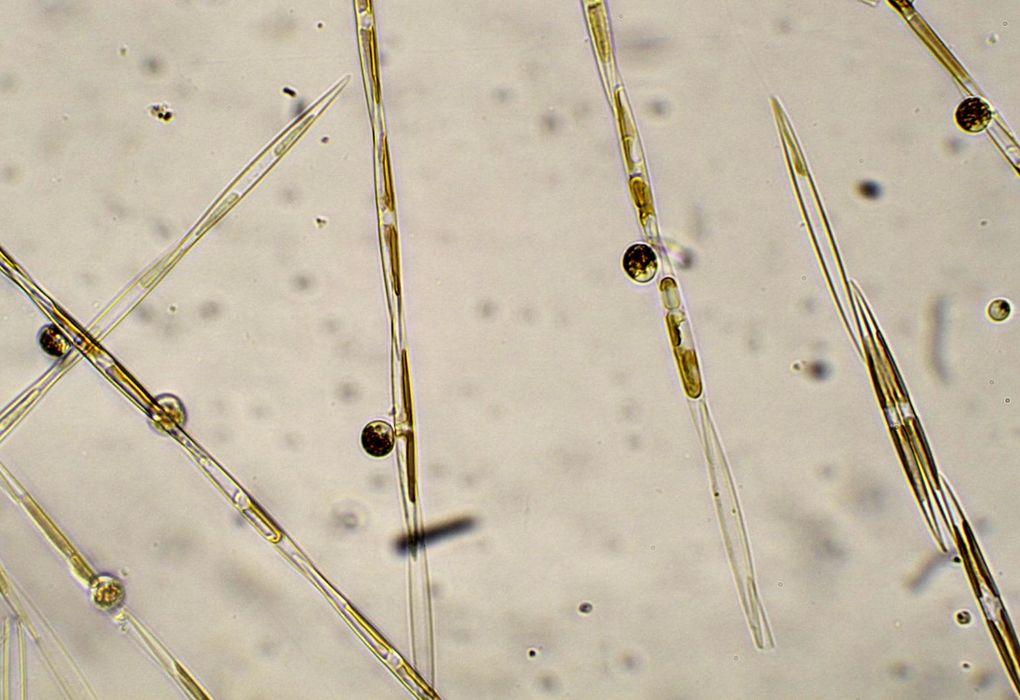
Scientists onboard a NOAA research vessel are beginning a survey of what could be the largest toxic algae bloom ever recorded off the West Coast.
A team of federal biologists set out from Oregon Monday to survey what could be the largest toxic algae bloom ever recorded off the West Coast.The effects stretch from Central California to British Columbia, and possibly as far north as Alaska. Dangerous levels of the natural toxin domoic acid have shut down recreational and commercial shellfish harvests in Washington, Oregon and California this spring, including the lucrative Dungeness crab fishery off Washington’s southern coast and the state’s popular razor-clam season.At the same time, two other types of toxins rarely seen in combination are turning up in shellfish in Puget Sound and along the Washington coast, said Vera Trainer, manager of the Marine Microbes and Toxins Programs at the Northwest Fisheries Science Center in Seattle.“The fact that we’re seeing multiple toxins at the same time, we’re seeing high levels of domoic acid, and we’re seeing a coastwide bloom — those are indications that this is unprecedented,” Trainer said.Scientists suspect this year’s unseasonably high temperatures are playing a role, along with “the blob” — a vast pool of unusually warm water that blossomed in the northeastern Pacific late last year. The blob has morphed since then, but offshore waters are still about two degrees warmer than normal, said University of Washington climate scientist Nick Bond, who coined the blob nickname.“This is perfect plankton-growing weather,” said Dan Ayres, coastal shellfish manager for the Washington Department of Fish and Wildlife.Domoic-acid outbreaks aren’t unusual in the fall, particularly in razor clams, Ayres said. But the toxin has never hit so hard in the spring, or required such widespread closures for crabs.“This is new territory for us,” Ayres said. “We’ve never had to close essentially half our coast.”Heat is not the only factor spurring the proliferation of the marine algae that produce the toxins, Trainer said. They also need a rich supply of nutrients, along with the right currents to carry them close to shore.Scientists onboard the NOAA research vessel Bell M. Shimada will collect water and algae samples, measure water temperatures and also test fish like sardines and anchovies that feed on plankton. The algae studies are being integrated with the ship’s prime mission, which is to assess West Coast sardine and hake populations.The ship will sample from the Mexican border to Vancouver Island in four separate legs.“By collecting data over the full West Coast with one ship, we will have a much better idea of where the bloom is, what is causing it, and why this year,” University of California, Santa Cruz ocean scientist Raphael Kudela said in an email.He and his colleagues found domoic-acid concentrations in California anchovies this year as high as any ever measured. “We haven’t seen a bloom that is this toxic in 15 years,” he wrote. “This is possibly the largest event spatially that we’ve ever recorded.”On Washington’s Long Beach Peninsula, Ayres recently spotted a sea lion wracked by seizures typical of domoic-acid poisoning. The animal arched its neck repeatedly, then collapsed into a fetal position and quivered. “Clearly something neurological was going on,” he said.Wildlife officials euthanized the creature and collected fecal samples that confirmed it had eaten prey — probably small fish — that in turn had fed on the toxic algae.Ayres’ crews collect water and shellfish samples from around the state, many of which are analyzed at the Washington Department of Health laboratory in Seattle. DOH also tests commercially harvested shellfish, so consumers can be confident that anything they buy in a market is safe to eat, said Jerry Borchert, the state’s marine biotoxin coordinator.But for recreational shellfish fans, the situation has been fraught this year even inside Puget Sound.“It all really started early this year,” Borchert said.Domoic-acid contamination is rare in Puget Sound, but several beds have been closed this year because of the presence of the toxin that causes paralytic shellfish poisoning (PSP) and a relatively new threat called diarrhetic shellfish poisoning (DSP). The first confirmed case of DSP poisoning in the United States occurred in 2011 in a family that ate mussels from Sequim Bay on the Olympic Peninsula, Borchert said.But 2015 is the first time regulators have detected dangerous levels of PSP, DSP and domoic acid in the state at the same time — and in some cases, in the same places, he said. “This has been a really bad year overall for biotoxins.”Over the past decade, Trainer and her colleagues have been working on models to help forecast biotoxin outbreaks in the same way meteorologists forecast long-term weather patterns, like El Niño. They’re also trying to figure out whether future climate change is likely to bring more frequent problems.At a recent conference in Sweden on that very question, everyone agreed that “climate change, including warmer temperatures, changes in wind patterns, ocean acidification, and other factors will influence harmful algal blooms,” Kudela wrote. “But we also agreed we don’t really have the data yet to test those hypotheses.”On past research voyages, Trainer and her team discovered offshore hot spots that seem to be the initiation points for outbreaks. There’s one in the so-called Juan de Fuca Eddy, where the California current collides with currents flowing from the Strait of Juan de Fuca. Another is Heceta Bank, a shallow, productive fishing ground off the Oregon coast, where nutrient-rich water wells up from the deep.“These hot spots are sort of like crockpots, where the algal cells can grow and get nutrients and just stew,” Trainer said.Scientists have also unraveled the way currents can sweep algae from the crockpots to the shore. “But what we still don’t know is why are these hot spots hotter in certain years than others,” Trainer said. “Our goal is to try to put this story together once we have data from the cruises.”
Read the original post: http://www.seattletimes.com
New study shows Arctic Ocean rapidly becoming more corrosive to marine species

Chukchi and Beaufort Seas could become less hospitable to shelled animals by 2030
New research by NOAA, University of Alaska, and Woods Hole Oceanographic Institution in the journal Oceanography shows that surface waters of the Chukchi and Beaufort seas could reach levels of acidity that threaten the ability of animals to build and maintain their shells by 2030, with the Bering Sea reaching this level of acidity by 2044.“Our research shows that within 15 years, the chemistry of these waters may no longer be saturated with enough calcium carbonate for a number of animals from tiny sea snails to Alaska King crabs to construct and maintain their shells at certain times of the year,” said Jeremy Mathis, an oceanographer at NOAA’s Pacific Marine Environmental Laboratory and lead author. “This change due to ocean acidification would not only affect shell-building animals but could ripple through the marine ecosystem.”A team of scientists led by Mathis and Jessica Cross from the University of Alaska Fairbanks collected observations on water temperature, salinity and dissolved carbon during two month-long expeditions to the Bering, Chukchi and Beaufort Seas onboard United States Coast Guard cutter Healy in 2011 and 2012.These data were used to validate a predictive model for the region that calculates the change over time in the amount of calcium and carbonate ions dissolved in seawater, an important indicator of ocean acidification. The model suggests these levels will drop below the current range in 2025 for the Beaufort Sea, 2027 for the Chukchi Sea and 2044 for the Bering Sea. “A key advance of this study was combining the power of field observations with numerical models to better predict the future,” said Scott Doney, a coauthor of the study and a senior scientist at the Woods Hole Oceanographic Institution.A form of calcium carbonate in the ocean, called aragonite, is used by animals to construct and maintain shells. When calcium and carbonate ion concentrations slip below tolerable levels, aragonite shells can begin to dissolve, particularly at early life stages. As the water chemistry slips below the present-day range, which varies by season, shell-building organisms and the fish that depend on these species for food can be affected.This region is home to some of our nation’s most valuable commercial and subsistence fisheries. NOAA’s latest Fisheries of the United States report estimates that nearly 60 percent of U.S. commercial fisheries landings by weight are harvested in Alaska. These 5.8 billion pounds brought in $1.9 billion in wholesale values or one third of all landings by value in the U.S. in 2013.The continental shelves of the Bering, Chukchi and Beaufort Seas are especially vulnerable to the effects of ocean acidification because the absorption of human-caused carbon dioxide emissions is not the only process contributing to acidity. Melting glaciers, upwelling of carbon-dioxide rich deep waters, freshwater input from rivers and the fact that cold water absorbs more carbon dioxide than warmer waters exacerbates ocean acidification in this region.“The Pacific-Arctic region, because of its vulnerability to ocean acidification, gives us an early glimpse of how the global ocean will respond to increased human-caused carbon dioxide emissions, which are being absorbed by our ocean,” said Mathis. “Increasing our observations in this area will help us develop the environmental information needed by policy makers and industry to address the growing challenges of ocean acidification.”


The crew lowers sensors that measure water temperature, salinity and dissolved carbon in the Arctic Ocean. (Mathis/NOAA)
Read the original post: http://research.noaa.gov
Kin Khao’s Recipe for Charred Squid in a Chili-Garlic Sauce
Pan-sear tender squid, douse it in a seriously spicy sauce and scatter it with peanuts and cilantro for a simple, striking summer meal. This recipe from Kin Khao in San Francisco offers an accessible intro to authentic Thai cooking
 HERBAL REMEDY | A scattering of cilantro provides a refreshing counterpoint to the bold spice and pungency of the sauce. Photo: Stephen Kent Johnson for The Wall Street Journal, Food Styling by Heather Meldrom, Prop Styling by Nidia Cueva
AT 31 YEARS OLD, Mike Gaines had mastered classical French and Japanese as well as New California cooking. But when he signed on to help open Kin Khao, a casual Thai eatery in downtown San Francisco, in a sense he was starting all over again. The restaurant’s owner, Pim Techamuanvivit, wasn’t worried: “I knew Mike was an excellent chef,” she said of her plan to introduce him to dishes she’d eaten all her life. “For me,” Mr. Gaines added, “the most difficult part was finding the balance Pim was looking for. When you are dealing with such bold flavors, you have to retrain your palate.”This recipe for pan-seared squid doused in a bracing vinaigrette and topped with toasted peanuts and fresh cilantro—the pair’s second Slow Food Fast contribution—provides a crash course in authentic Thai cooking. “I insisted that it be kick-you-in-the-face spicy,” Ms. Techamuanvivit said.The sauce, made with fresh chilies, fish sauce, garlic, lime juice and palm sugar, is known as nam jim talay. “It should be sour, spicy, garlicky and sweet,” said Ms. Techamuanvivit. “Thai cooks use sugar to round things out. If the first thing you taste is sweet, then the sauce is wrong.” She added that though the seafood used in this dish may change according to the season, the toppings never do: “The peanut and cilantro are not just garnishes. They are integral to the dish.”Both Mr. Gaines and Ms. Techamuanvivit lament the way Thai cooking has been dumbed down in this country. From their modest yet ambitious kitchen, they are working to raise the bar with punchy, fresh and textured dishes like this one. Mr. Gaines compared their efforts to what chefs did a couple of decades ago to increase awareness about regional Italian cooking versus the Americanized pasta and pizza that had become ubiquitous. He was firm on this point: “Thai food is much more nuanced than we think.”
Charred Squid in a Chili-Garlic SauceTotal Time: 20 minutes Serves: 45 cloves garlic, roughly chopped1½ bird’s eye or other hot chilies, stemmed, seeded and roughly chopped3 tablespoons palm sugar or light brown sugarJuice of 1½ limes5 tablespoons fish sauce2 tablespoons bran or olive oil2 pounds whole squid, cleaned1 cup chopped cilantro¼ cup toasted and finely chopped peanutsCooked sticky or white rice, for serving1. Use a mortar and pestle or a food processor to crush garlic, chilies and sugar to a coarse paste. Transfer to a small bowl, then stir in lime juice and fish sauce. Set aside.2. Heat half the oil in a cast-iron or other large, heavy pan over high heat. Once oil is shimmeringhot, sear half the squid, turning frequently, until surface browns on all sides and squid just cooks through, about 3 minutes total. Repeat with remaining oil and squid.3. Transfer squid to a serving plate and spoon sauce over top. Sprinkle with cilantro and peanuts. Serve with sticky or white rice.
Read original post: www.wsj.com