NASA: Rising Seas About to Catch Up With the West Coast
 NASA Animation shows the wide variance in sea level rise in recent years. The pale coloration along the West Coast illustrates a lower rate of rise. (NASA Scientific Visualization Studio)
Rising Seas are about to become a bigger issue for the West Coast, according to scientists.Using satellite and other data, NASA scientists have been tracking rising sea levels around the world. They say that natural cycles in the Pacific have been masking effects of sea rise for about the last 20 years. But that’s changing.“In the next five or ten years, I think the west coast of the United States is going to catch up,” says Josh Willis, a climate scientist at NASA’s Jet Propulsion Lab in Pasadena. He says a major ocean phase known as the Pacific Decadal Oscillation is in the midst of a big shift.For about the past two decades, the PDO, which Willis describes as “El Niño’s bigger, slower, brother,” was “piling up” warmer water on the far side of the ocean, exacerbating sea rise there. When water warms, it expands.“So we’ve actually seen a slight drop in sea levels off of our coastline because of the rearrangement of heat within the oceans,” Willis explains.That rearrangement could mean an acceleration in the rate that seas rise long the West Coast, eventually overtaking the pace of sea level rise on the East Coast and elsewhere.“We could be looking at rates in the eastern Pacific two or three times as high as the global rates in the coming years,” says Willis. “So we could be in for wild ride over the next 20 years or so.”As KQED and San Francisco Public Press have reported recently, billions in shoreline development in the Bay Area are in the planning stages or already begun, despite scientists’ warnings about rising seas.Scientists say the brewing El Niño will also pile up warm water along California, making coastal flooding that much more likely, very soon. The warm water along the Equator that largely defines El Niño is expected to rival or surpass the legendary “Godzilla” El Niño of 1997-98 in strength.NASA says global sea levels have risen about eight inches since the beginning of the 20th century and more than two inches in the last 20 years. Though simple thermal expansion of the water accounts for about a third of the rise so far, climate scientists expect melting glaciers and ice sheets to play a much larger role in coming years.
 Video: https://youtu.be/rkCzae-FCek
Read the original post: http://ww2.kqed.org
A Giant Glob of Deadly Algae Is Floating off the West Coast

Cells of pseudo-nitzschia, a type of algae that's producing neurotoxins in the Pacific.
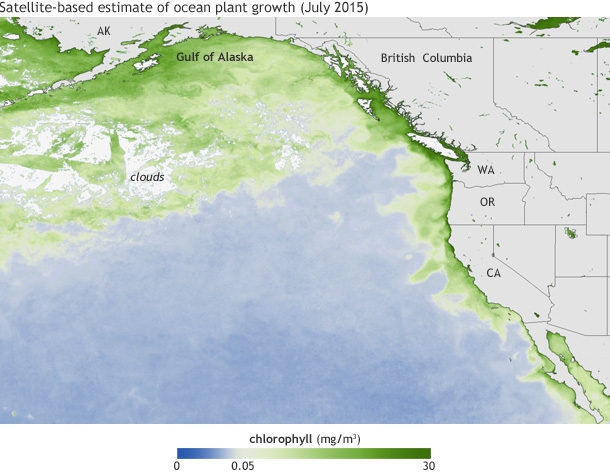
From the air, the Pacific algal bloom doesn't look like much of a threat: a wispy, brownish stream, snaking up along the West Coast. But it's causing amnesia in birds, deadly seizures in sea lions, and a crippling decline in the West Coast shellfish industry. Here's what you need to know about it, from what this bloom has to do with the drought to why these toxins could be a real threat to the homeless.What's causing it? The culprits are single-celled, plant-like organisms called pseudo-nitzschia, a subset of the thousands of species of algae that produce more than 50 percent of the world's oxygen through photosynthesis. They're a hardy variety usually found in cool, shallow oceans, where they survive on light and dissolved nutrients, including silcates, nitrates, and phosphates. "They're sort of like the dandelions of the sea," says Vera Trainer, who manages the Marine Biotoxin Program at the Northwest Fisheries Science Center in Seattle. "They're always there in some low numbers, just waiting for nutrients to be resupplied to the ocean's surface." In most years, blooms in the eastern Pacific are contained near "hot spots" that dot the West Coast—relatively shallow and sheltered places like California's Monterey Bay or the Channel Islands. They usually flare up in April or May as trade winds cycle nutrient-rich waters from offshore depths to the coast in a process called "upwelling," but they fade after only a few weeks.Why is it sticking around so long? The jury's still out, but scientists are beginning to get a clearer idea. These past few years have been "incredibly weird" in the northeast Pacific, says Nate Mantua, a research scientist at the National Oceanic and Atmospheric Administration's Southwest Fisheries Science Center in Santa Cruz. He points to the same "ridiculously resilient ridge" of high pressure that's been causing the historic drought in the western United States: This pressure also resulted in a pool of exceptionally warm water in the Pacific (known as "the blob"), with little weather to disperse it. Those conditions, along with prevailing winds and colder currents that ferry nutrients back to the coast, seem to be supplying the algae with a seemingly endless feast.That makes the source of this bloom different from its cousin in the Gulf of Mexico, where fertilizers flowing from as far as Iowa are feeding a zone of algae that's as large as New Jersey. "We're seeing them in relatively pristine waters of the US West Coast," Trainer explains, though she adds runoff and sewage discharge may be playing some role in the blooms off Southern California.So just how big is this thing? Bigger than researchers have ever seen: a patchy stream that stretches from Southern California up along the Alaskan coast. The hot spot blooms that appear each spring are merging for the first time, Trainer explains. Though the combined mass has ebbed and flowed over the past four months, it hasn't let up; her team finds algae each time they journey out to sea, with no signs of abatement soon. And it's also unusually potent. "These are the highest levels of toxicity we've ever seen," says Raphael Kudela, a professor of ocean sciences at the University of California-Santa Cruz. "It's a truly extraordinary phenomenon."

Levels of chlorophyll, viewed from space, indicate where algae is present in the waters of the Pacific. NOAA
How deadly are these "dandelions"? The algae produce a compound called domoic acid, a type of amino acid that leads to a condition commonly known as "amnesic shellfish poisoning" in humans. Shellfish and some small fish, like sardines and anchovies, feed on the algae and concentrate the toxin in their flesh. When animals further up the food chain—like birds—eat those fish and shellfish, the domoic acid seeps into the bloodstream and eventually the brain, where it attacks cells in the hippocampus, the brain's command center for memory and learning. The result: amnesia-stricken birds that will repeatedly fly into windows, and sea lions that writhe on the shore, plagued by seizures. Both are symptoms of rapidly firing neurons in the hippocampus, which will eventually burn out and kill the animal. Beaches have been littered with dead fish, birds, and sea lions up and down the Pacific coast since May—all the way up to Alaska, where NOAA is investigating the deaths of fin whales in connection with the toxin.
Will it kill me? Probably not. Amnesic shellfish poisoning was discovered in 1987, when what was then a mysterious illness killed three people and sickened 105 more on Prince Edward Island, Canada. But cases since then have been rare. That's due to a bevy of regulations that shut down recreational shellfish harvesting when toxicity spikes and require commercial shellfish operations to test each batch for toxins. Those moratoriums have cut into Washington's $84 million crab industry, while a ban on recreational clam digging has hurt smaller, more remote communities, particularly in the Pacific Northwest. Trainer points to indigenous regions in coastal Washington, like the Quinault Indian Nation, where many members make ends meet by harvesting razor clams for healthy meals in the winter. Though fish are also tested, the toxins seep into their guts, which don't usually find their way to the dinner table.
Researchers are also investigating what low levels of domoic acid can do to the brain over many years of exposure. Trainer cautions that the mild symptoms of low-level contamination mean most people wouldn't be aware of the problem: "They might think they have a cold, or a little flu," she says. Results from an ongoing inquiry into the effects of domoic acid on Native Americans in the Pacific Northwest have found evidence of memory and learning impairment, while studies in sea lions found antibodies for domoic acid, suggesting even low-level contamination can cause an adverse physiological response. Kudela also suggests that the homeless around Monterey Bay, where his team is located, could be looking to shellfish as a free meal, inadvertently exposing themselves to the toxins.
What happens next? Researchers are waiting for this fall's big coastal storms, which should churn up waters and disperse the nutrients that allow the algae to thrive. Those systems should gather between late September in the Pacific Northwest and early winter in California. But from then on it's harder to say. The "blob" could persist through or return after the El Niño expected this winter. But if it is strong enough, the El Niño could also lead to less predictable conditions come spring and even make another large bloom unlikely for years to come, explains Mantua, the NOAA climate scientist. That would make this current, extreme algal bloom look more like an anomaly than a new trend.Still, even if the coast sees some relief from algae for the next few years, big changes can be expected in the coming decades as oceans warm worldwide. That could produce more hospitable conditions for algae and lead to different ecological threats, like red tides and dead zones, in the Pacific. "I think this is a window into the future," Trainer says. "We can expect more of this to come."
Video: https://www.youtube.com/watch?v=SiAFmxq0VOU&feature=youtu.be
Read the original post and watch the video: www.motherjones.com
Toxic Algae Is Killing Sea Lions, Shows No Sign of Diminishing

Cells of the microalgae that make the neurotoxin domoic acid. (Anthony Odell/University of Washington)
A toxic algae bloom that began off the West Coast this spring now stretches from California to Alaska. It’s poisoning marine life from shellfish to sardines to sea lions, and scientists say it’s one of the worst they’ve seen.“We’ve never seen a bloom this big before,” says Anthony Odell, a research analyst with the University of Washington’s harmful algae bloom monitoring program. “It’s also one of the most toxic blooms we’ve seen.”Odell is one of a rotating team of scientists who are studying the bloom aboard the Bell M. Shimada, a research vessel belonging to NOAA, the National Oceanic and Atmospheric Administration. Equipped with state-of-the-art technology, the ship is traveling this summer up the west coast to British Columbia.Odell says he’s seen a lot of toxic blooms, but this one’s different, partly because it consists of several species of harmful algae.“It’s making a toxic plankton soup,” he says. “It’s pretty amazing to see all these things blooming together, because usually they prefer these different conditions so there’s definitely something unusual going on.”Toxic algae blooms are not uncommon in the Pacific Ocean—they’re called red tides and they come in summer’s warm waters and dissipate in the fall. But the current algae bloom isn’t likely to dissipate.The algae are thriving in unusually warm waters—in fact, abnormally warm water that scientists are calling “the Blob.” The algae bloom itself is an estimated 40 miles wide and, in some places, could reach a depth of more than two football fields, according to sonar readings. Scientists have been able to verify the presence of the algae bloom down to 45 feet by testing the water.“From a scientific standpoint it’s fascinating,” Odell says. “From a sea life and human health view point, it’s pretty scary. Because it’s so big and it’s so toxic and it’s not really giving sea life a chance.”
One of the toxins the algae are producing is domoic acid. It’s a neurotoxin that doesn’t have negative effects on shellfish and fish. But it can kill other marine life because the micro algae—or phytoplankton—are the base of the food web.“Everything in the ocean eats phytoplankton or eats something that eats phytoplankton,” Odell says. “So when you have one of these species that starts producing toxin, it works its way up through the food chain really fast. It gets into shellfish, it gets into crabs, it gets into small fin fish like sardines and anchovies, which are then fed on by salmon and pelicans and seals and sea lions.”NOAA scientists say domoic acid from the algae bloom is responsible for the high number of seizures and deaths in California sea lions this summer.Domoic acid can also poison humans, causing nausea and dizziness, or in worse cases, permanent short-term memory loss, and even death. That’s why fishery managers have shut down some crab fisheries in Oregon and Washington, and severely restricted fishery markets from California’s central coast.“We’re now unable to market anchovy,” says Diane Pleschner-Steele, executive director of the California Wetfish Producers Association. “And there’s a small, kind of an ethnic market for anchovy for human consumption. And also, anchovy used for bait and for animal food. So we’re now prohibited from selling to the public.”
She said after the anchovy market collapsed, fishermen moved on to squid, which feed on a different plankton.
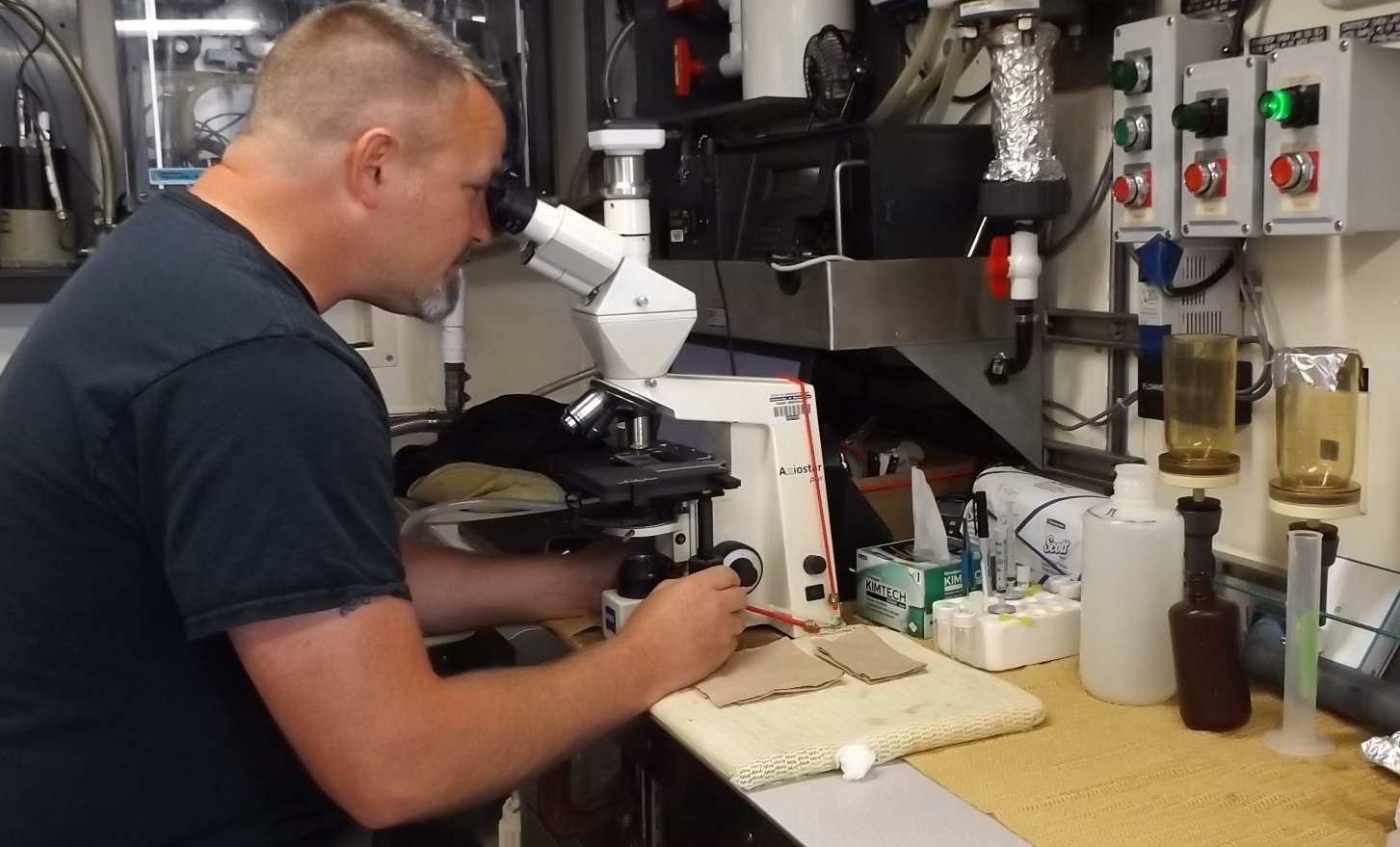
So far, there’s little sign the algae bloom is going to slow down and give sea life a break.“There’s still quite a bit of toxin production going on,” Odell says, “and a rather sizable bloom.”Although the unusually warm ocean water is one suspect, scientists still don’t know for sure the cause of the algae bloom. Odell says they’re researching whether climate change is contributing.“There’s been an international consensus that climate change would affect harmful algal blooms in the fact that we would likely see more of them,” Odell says. “But there’s just not enough data to tie the two together yet.”Scientists are scheduled to arrive in British Columbia in September. Then, it could take a few months to compile data before they can say more about what’s causing the toxic algae bloom, and what it means for the changing ecosystem of the Pacific Ocean.
Read/listen to the original story: http://ww2.kqed.org/
Researchers Say Ocean Acidification Poses Legitimate Extinction Threat to West Coast Shellfish
— Posted with permission of SEAFOODNEWS.COM. Please do not republish without their permission. —
SEAFOODNEWS.COM [San Francisco Chronicle] by Lizzie Johnson - August 21, 2015Long before scientists and shellfish companies were aware of what was happening, a silent killer began devastating California’s oyster industry.About 10 years ago, baby oysters, or spat, began to die at an alarming rate. Farms along the West Coast lost more than half of their bivalves before they reached maturity, creating a shortage of seed. That deficit hit Hog Island Oyster Co. in Marshall especially hard.So owners Terry Sawyer and John Finger began collaborating with UC Davis’ Bodega Marine Laboratory to figure out what was plaguing the water in Tomales Bay, their backyard.After more than two years of tests, they have a better understanding of the condition afflicting West Coast oysters, mussels and clams. But there is trouble ahead for California’s shellfish industry as it faces the threat of species extinction.“We are talking about something that’s going to happen in my lifetime and my children’s lifetime,” said Tessa Hill, an associate professor of geology at UC Davis. “We are going to see dramatic changes in terms of what animals can be successful on the California coast because of ocean acidification.”That culprit, ocean acidification, is the caustic cousin of climate change, and it shifts the chemistry of ocean water, making it harder for oysters to grow. That’s because about 30 percent of the carbon dioxide released into the atmosphere is absorbed by the ocean, causing pH levels to plummet and making the water more acidic. The more pollution in the air, the more carbon dioxide the ocean absorbs.Larval stage stuntedThe hostile conditions stunt the growth of oysters in the larval stage, making it difficult to build their fragile calcium carbonate shells. If acidification doesn’t kill them outright, an increased susceptibility to disease and predators often will. The stress also weakens many small oysters, so it takes them longer to reach reproductive age.“It’s definitely scary,” said Zane Finger, who runs the Marshall oyster farm for his father, John. “If you’re doing any kind of job that depends on the environment, whether it’s farming on land or farming in the water, it can be uncertain. Things are changing, and it makes me nervous about the future of this business.”Oyster growers in Oregon were the first to sound the alarm 10 years ago on ocean acidification. Whiskey Creek Shellfish Hatchery, based in Oregon’s Netarts Bay, and Oregon State University were among the first to work together and publish research on the phenomenon. They established the link between acidification and the collapse of oyster seed production.Dire prediction“It was one of the first times that we have been able to show how ocean acidification affects oyster larval development at a critical life stage,” OSU chemical oceanographer Burke Hales said in a statement. He was a co-author on one of the first studies in Oregon. “The predicted rise of atmospheric carbon dioxide in the next two to three decades may push oyster larval growth past the break-even point in terms of production.”And in 2010, a mix of scientists and industry partners formed the California Current Acidification Network (C-CAN), which works for more research on acidification. UC Davis and Hog Island, both members, have helped expand research along the coast. The relationship has helped Hog Island prepare for future water conditions and allowed the university to conduct research on the link between climate change and acidification.For the first two years of the company’s collaboration with Hill, data were collected only once a month from a buoy in the estuary. Then the federal Central and Northern California Ocean Observing System (which goes by the mile-long acronym of CeNCOOS), offered to upgrade the system.Now, it’s a round-the-clock operation that gives minute-by-minute data on water conditions. Hill runs a small lab tucked in the back of a shed at Hog Island’s Marshall oyster farm. The structure is damp and filled with loudly whining equipment. Tubes pump seawater directly in from the bay so the team can closely monitor changes in acidity, salinity, temperature and oxygen.‘Stressful for oysters’“You can get up in the morning and look at the charts and say, ‘Oh, the water is stressful for the oysters today,’” Hill said, pointing to a zigzagging line on the computer screen. “It gives them real-time information and a big picture of what’s happening in the bay.”They’ve learned that the high acidity in the water is related to seasonal upwelling, or when the wind pushes surface water offshore, allowing the deeper, more acidic water to rise up. For now, hatcheries can grow spat during spring and summer, considered the off seasons. But by 2030, upwellings are expected to last longer, and by 2050, they could occur year-round, Hill said.“The rate of change is something that we have never seen before as a planet,” Sawyer said. “And it’s measurable; you can’t argue with that. We have the data. We should pay attention to it now, immediately, and not later.”High mortality rateThe mortality rate for baby oysters is still high — anywhere from 50 to 100 percent. But oyster companies have learned to compensate for it by growing more spat in different locations. They’ve also put a quota on the amount of shellfish customers can buy. Diversifying will hopefully prevent another shortage like the one that hit from 2007 to 2010.Sawyer and John Finger are planning to expand the company’s aquaculture operation. Within the next two years, they will open a $1.5 million oyster hatchery in Humboldt Bay. It will provide seeds to grow in Tomales Bay and, eventually, harvest some of its own oysters as well. Permits have been approved, and cultivation will start later this year.A day on the farmFor now, operations at Hog Island Oyster Co.’s Marshall farm remain the same. Most mornings, workers slide on their rubber waders and guide a flat-bottomed boat onto the water. Then they slosh to the oyster racks nestled on the muddy floor, dragging them to the surface with long hooks. The smell of musty water and saltwater fills the air as they work.Soon — and Sawyer hopes for a long time — those oysters will make their way to someone’s plate.“I care about this on so many levels,” he said. “From a farming point of view, from business, from caring about my kids and the future generations who will have to deal with this. We live in a pretty amazing world, and I would like to preserve that as much as possible.”
Subscribe to: SEAFOODNEWS.COM
Spike in Whale Entanglements Along California Coast May Trigger Dungeness Restrictions
— Posted with permission of SEAFOODNEWS.COM. Please do not republish without their permission. —
SEAFOODNEWS.COM [San Francisco Chronicle] By Rachel Swan - August 20, 2015 -Record numbers of whales are showing up along the California coastline with fishing line tangled around their blubbery bodies, in a trend that's bedeviled fishermen, environmentalists and state regulators alike.The entanglements happen when whales run into gear that commercial fishermen use to catch Dungeness crab or other crustaceans. The "line" is a thick rope extending from a buoy on the ocean surface to a heavy trap - or "pot" - on the ocean floor. Whales run into the rope while chasing prey along the coastline, and it gets caught in their mouths."The whales move where the food is, and they're feeding, so they'll have their mouths open," said Peggy Stap, executive director of Marine Life Studies, a conservation group in Moss Landing. She's seen whales struggle to eat with line running through their mouths.In some cases, Stap said, the line tangles around their fins and impedes them from swimming.In one instance in September, Stap said, a fisherman set up 600 feet of line and spot prawn traps in a part of Monterey Bay where humpbacks were feeding. One whale got tangled and marooned, bound by the rope to 25 spot prawn traps and two mud anchors, Stap said. She led the rescue team that disentangled it."It's incredibly sad" said Kristen Monsell, an attorney for the San Francisco-based Center for Biological Diversity, one of several conservation groups working to prevent whale entanglement.Drowning, choking"If the gear is super heavy, they drown," Monsell said. "It impedes their ability to feed if it gets in their mouths. If it wraps around their bodies and they continue to grow, they'll slowly choke."The surge in whale entanglements evidently began in 2014, when 30 whales were found entangled on the West Coast, and at least seven died from their injuries, according to the National Marine Fisheries Service. The previous decade saw about eight entanglements per year along the West Coast. As of April this year, 25 whales were ensnared off the California coastline, according to the Center for Biological Diversity. Among them was a killer whale that washed up near Fort Bragg with rope wounds around its tail. Distressed by the trend, representatives of the Ocean Protection Council, the California Department of Fish and Wildlife, and the National Oceanic and Atmospheric Administration will hold a public meeting Thursday at the Elihu M. Harris State Building in Oakland. They'll target the Dungeness crab fishery, which has caused the majority of whale entanglements on the West Coast, Monsell said.Local crab fishermen will also attend the meeting, and many say they, too, are concerned about the problem."The reality is, a fisherman may not even realize this is happening," said Dan Lawson, a fisheries biologist with the National Oceanic and Atmospheric Administration. Among the ideas on the table is a pilot program that would increase the number of crab pots on each fishing line, thereby decreasing the number of lines in the water. Another idea is to create a better logging system to keep track of how much gear is in the water. Many entanglements happen when whales run into broken line or derelict traps that fishermen have long forgotten, Monsell said. Representatives of several conservation groups - including Earthjustice, Oceana and the Center for Biological Diversity - proposed those reforms, and others, in a letter to state officials in April.Why more entanglements?Still, experts haven't yet figured out what caused the sudden rise in entanglements, and some fishermen say they're being unfairly targeted."Things have changed, the water's hot, and the warm water pushed the whales in," said Larry Collins, a retired fisherman who now serves as president of the Crab Boat Owners Association in San Francisco. "I think this is a one-off."He may be right, according to Nate Mantua, a Santa Cruz-based research scientist for the NOAA, who also blames changes in the ocean temperature - not the fishing industry - for the recent string of entanglements.Mantua said the same weather pattern that brought drought and increased wildfires in California has also caused the ocean to heat up, leading the "forage fish" that whales eat to seek refuge in a narrow band of cool water by the shoreline. "In the last few months, there have been extraordinary sightings of lots of marine life, and that Blue Planet food-web-type action by the shore," Mantua said. "Part of that is because the water (farther) offshore has been so lacking in things like anchovies, sardines and squid - the 'popcorn of the sea.'"Because whales have to follow their prey, many of them are also floating into that narrow band of coastal water, Mantua said. As a result, they risk getting ensnared in the crab pots that fishermen set just a couple miles off the coast.Since scientists still don't understand what is causing the unusual weather and how long the pattern will persist, the onus has fallen on rescue teams, environmentalists and commercial fishermen to help protect the whales. Some fishermen worry they'll bear the brunt of the whale-saving effort.Costly solutionsJim Anderson, a veteran crabber who mans the Allaine boat in Half Moon Bay, said some proposals, like increasing the number of crab pots per line, would be costly to implement."It would create all kinds of difficulty for fishermen" Anderson said, indicating that he and his peers would have to purchase fatter rope, heavier buoys and special lifting equipment, just to shift from one to two traps per line. Whales that got entangled would wind up dragging twice as much gear along with them, he said, putting them in more danger of drowning. Anderson also worried that state or federal officials might try to rewrite the regulations for commercial fishing, just to solve a temporary problem. "What if this is something this year because of the drought, and then we get an El Niño and conditions change?" he asked. "And then we've rewritten all these laws."Nonetheless, Anderson said he'd like to find practical ways to help.Fishermen aren't villainsStap stressed that fishermen are not the bad guys."They're trying to do their job and earn a living, and they don't want the whales entangled any more than we do," she said. Collins, the retired fisherman, said he will attend the meeting Thursday, even though he's wary of attempts to regulate the fishing industry."We love the whales," Collins said. "But we also like making a living, and feeding people Dungeness crab."
Subscribe to SEAFOODNEWS.COM
El Niño, explained: Why this year's could be one of the strongest on record

Over the past year, scientists have been keeping a close eye on an important swath of the Pacific Ocean, just along the equator. When conditions here are just right, an El Niño can form — and wreak havoc on weather patterns across the globe.And right now, it looks like we're on pace for a very large El Niño this fall or winter. Quite possibly one of the strongest on record. Based on past experience, that could potentially bring much-needed rain in California, but also drought in Australia, destructive floods in Peru, and so on. A strong El Niño could also help make 2015 and 2016 some of the hottest years ever recorded. It'd be a very big deal.But El Niño events are often unpredictable and full of surprises. So nothing's guaranteed just yet. What follows is a guide to how El Niño works, what we know about the 2015 event, and how a potentially massive El Niño could upend the world's weather later this year.
A very basic definition of El Niño
- El Niño is a weather phenomenon that occurs irregularly in the eastern tropical Pacific every two to seven years. When the trade winds that usually blow from east to west weaken, sea surface temperatures start rising, setting off a chain of weather impacts.
- El Niños can be strong or weak. Strong events can temporarily disrupt weather patterns around the world, typically making certain regions wetter (Peru or California, say) and others drier (Southeast Asia). Some countries suffer major damage as a result.
- El Niños also transfer heat stored in the deeper layers of the ocean to the surface. When combined with global warming, that can lead to record hot years, as in 1998.
- "El Niño" got its name in the 1800s from Peruvian fisherman, who first noticed a mysterious warm current that would appear around Christmas. They called it the "little boy" or "Christ child."
Why this year's El Niño could be a huge deal
The last truly massive El Niño appeared in 1997-'98 and ended up causing an estimated $35 billion in destruction and 23,000 deaths around the world. (It also inspired that famous Chris Farley sketch.) Now we may be on the verge of a similar-size event:

Early-August status of the 1997 and 2015 El NIño events. Satellite imagery shows the departure from average sea-surface height for a given time of year, which is correlated with warmth in the upper ocean. (NASA/JPL via Weather Underground)

That, in itself, is a surprise. Back in March, NOAA's Climate Prediction Center announced that a weak El Niño had formed in the Pacific, but many experts initially thought it might just fizzle out in the summer. Instead, El Niño kept getting stronger, with ocean temperatures in the eastern tropical Pacific continuing to soar. Some forecasters now think this could turn into one of the strongest El Niño events in memory when it peaks later this fall or winter."We’re predicting this El Niño could be among the strongest El Niños in the historical record, dating back to 1950," said Mike Halpert, deputy director of the Climate Prediction Center, in a recent press call. We'll see if this latest forecast holds up.If it does, countries across the globe will have to brace themselves. In the past, major El Niño events have brought unusually hot, dry weather to Australia that can cramp wheat yields and amp up wildfires. It can bring hotter, drier weather to India that hurts agriculture. It can bring heavy rain and destructive flooding to Peru, washing away houses and spreading cholera. In 1997, El Niño dried out Indonesia so badly that it led to huge forest fires whose smoke disrupted daily life in Singapore.Yet El Niño isn't all bad. In the United States, it could potentially bring needed rain this winter to ease California's drought (though also mudslides and flooding). Historically, El Niño has also served up milder US winters and helped tamp down hurricanes in the Atlantic Ocean.One important caveat here is that every El Niño is a bit different — and some have unexpected impacts. As NOAA's Emily Becker points out, strong El Niño events usually bring rain to California (as in 1982-'83), but occasionally they don't (as in 1965-'66):

Another story to watch is whether a strong El Niño could help make 2015 or 2016 the hottest year on record. This one seems increasingly plausible.Global temperatures are already going up over time, thanks to all the carbon dioxide we're adding to the atmosphere. According to NASA, 2014 was already the hottest year on record. But there was no El Niño that year — and El Niño years tend to be a bit hotter than average, as heat gets transferred from the ocean to the surface. So the combination of El Niño and rising CO2 could help 2015 and even 2016 break records:
(NOAA)
Bottom line: There's still a lot of uncertainty here, but El Niño could very well be the biggest weather story of late 2015, with potentially far-reaching impacts.
How El Niño actually works, step by step
To see how El Niño works, it helps to understand what the equatorial Pacific looks like under normal, or "neutral," conditions:1) Neutral conditions in the equatorial Pacific OceanNormally, the tropical Pacific features strong trade winds that blow warm ocean water from east to west, where it piles up near Indonesia. Meanwhile, back east along South America, frigid water deep down in the ocean gets pulled up closer to the surface, cooling the area around Peru. Here's a diagram:
(William Kessler/NOAA/PMEL)
As a result, during "neutral" conditions, sea levels are about half a meter higher near Indonesia than they are in Peru. And the surface water near Indonesia is about 8°C warmer (14.4°F) than it is near Peru. That temperature difference creates a convective loop in the atmosphere that, in turn, reinforces the trade winds.This ends up affecting a lot more than just this stretch of ocean. Because the Pacific is so vast, this system is a major driving force in the global climate. The large, warm pool of water near Indonesia causes the air above it to rise, creating rainfall in the region. And this system shapes the jet streams that guide weather and storms around the world.That's how it works under normal conditions, anyway. But things look a little different when El Niño comes along.2) Now along comes El NiñoEvery few years, those prevailing Pacific trade winds that blow east to west can weaken. (Scientists are still debating the nuances of exactly why this happens.)When the trade winds weaken, all that warm water that was piled up near Indonesia starts sloshing back eastward, pulled back down by gravity. What's more, the underwater layer known as the thermocline starts sinking. As a result, there's less cold water rising up from the deep ocean near South America — so the waters near Peru start warming up. Here's another diagram:
(William Kessler/NOAA/PMEL)
This causes sea surface temperatures in the east and central Pacific to start rising and the trade winds to weaken even further. What's more, rainfall starts following that warm pool of water as it travels eastward. That's why El Niño is usually associated with drier weather in places like Indonesia and Australia, as well as heavier rains in places like Peru (or California). The rain is essentially moving east.Scientists officially declare an El Niño when sea surface temperatures in the equatorial Pacific Ocean (known as the Niño 3.4 region) rise 0.5°C above their historical baseline for three months in a row — and once atmospheric conditions and rainfall patterns shift accordingly.Again, because the Pacific is so vast, an El Niño can have large ripple effects on weather around the world, especially during the winter months. Here's a look at the changes that have historically accompanied El Niño events:Typical effects of an El Niño during the winter:
(NOAA)
A strong El Niño can weaken monsoons in the Indian Ocean, for example. It can also cause the jet stream to start stretching from the Eastern Pacific across the southern United States, bringing rainfall and storms with it. Still, a lot depends on how strong the El Niño actually is — and occasionally there are aberrations and exceptions to the rule. More on that below.
El Niño's return in 2015 — and why scientists are talking about a "Godzilla" event
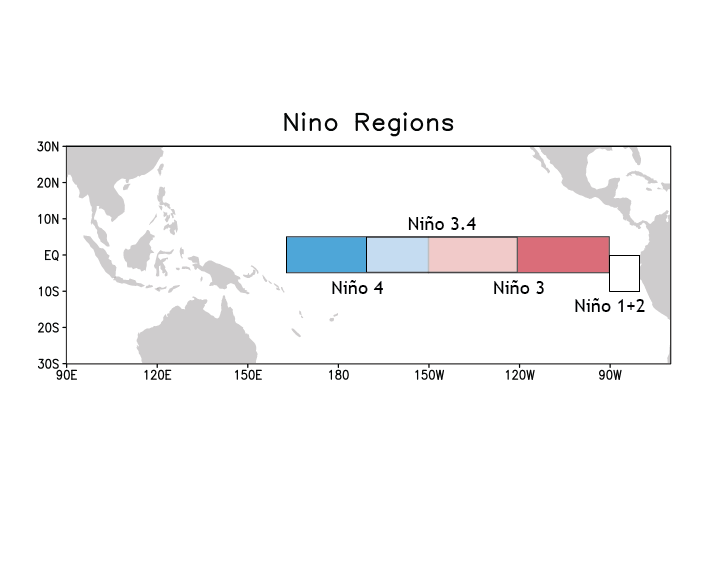
Ever since early 2014, scientists have been expecting this latest El Niño to form. But, in a sign of how slippery the system can be, El Niño kept defying predictions and not showing up.Finally, in March 2015, after a number of false starts, scientists at NOAA's climate prediction center were ready to declare that a weak El Niño was underway. Specifically, sea surface temperatures in that Niño 3.4 region (roughly in the center of the chart below) had been at least 0.5°C above their baseline since September. And, importantly, atmospheric conditions were responding in turn, with more rain over the central Pacific and less rain over Indonesia:
Sea surface temperature departures from average (based on 1981–2010) at the end of February 2015. NOAA map by Emily Becker, Climate Prediction Center.
At the time, however, NOAA's forecasters said that this El Niño looked "weak," with possibly minimal effects on global weather patterns, and only had a 50 to 60 percent chance of lasting through the summer.Then, somewhat unexpectedly, El Niño got stronger and stronger. By August 2015, sea surface temperatures had soared to more than 1.2°C above baseline in the Niño 3.4 region, and scientists were seeing the resulting telltale atmospheric changes. Here's a chart from July and August — notice how the anomalous warm area has moved eastward since March:

Sea surface temperatures in the tropical Pacific: departure from the 1981-2010 average. (NOAA)
NOAA's Climate Prediction Center is now estimating that there's a 90 percent chance El Niño will persist through the fall/winter. And when it peaks, signs suggest that this could be an extremely strong event, rivaling the strongest El Niños since detailed records began in 1950. Some forecasters have even dubbed this one a potential "Godzilla."Over at NOAA's ENSO blog, Emily Becker offers a more detailed breakdown of why forecasters are betting on a powerful, possibly record-setting, El Niño. Keep in mind that forecasts often go awry, that surprises occur regularly, and we can't be perfectly certain of how things will turn out. Still, she writes, "We have a relatively confident forecast for a strong event."
El Niño could bring rain to California — but may not end the drought
As noted above, El Niño tends to be associated with changes in weather patterns around the world, especially during the Northern Hemisphere winter. The most tantalizing possibility is that a strong El Niño could bring rain to California, potentially alleviating the state's drought.But even here, nothing is yet assured. El Niño only affects US weather indirectly, by altering atmospheric circulation and shifting the North Pacific jet stream. (See here for a lucid explanation by Columbia University's Anthony Barnston.) This is an intricate chain of events, and small kinks at certain points can affect the ultimate outcome.As such, Becker cautions people to think not in terms of certainties but in terms of probabilities. Here's an example of how El Niño might shift the odds of a wet winter for California (she notes that this isn't a prediction, just an illustration):
An example of how a strong El Niño could shift the odds for the amount of seasonal precipitation. Official outlooks from the Climate Prediction Center are available here.
In other words, thanks to El Niño, California has a greater chance of more precipitation this winter, but not a 100 percent chance.What's more, even if rain does come, that may not be enough to completely erase the massive water deficit that California has built up over the past five years. The state likely needs record precipitation to end the drought, and it also needs the right mix of rain (to recharge the reservoirs) and snow in the Sierra Nevada mountains (to melt during the spring and summer).Also, be warned: Heavy rain after a drought can bring floods and mudslides. So California needs to be ready for some negative impacts, as well.
El Niño tends to hurt some countries, and benefit others
It's not quite right to say that El Niño events are "bad" or "good." They tend to have different impacts on different regions.One recent study from the University of Cambridge found that on average, El Niño events hurt economic activity in Australia, Chile, Indonesia, India, Japan, New Zealand, and South Africa. The reasons varied: drought and reduced crop yields in Australia and India, forest fires in Indonesia, less-productive fisheries in Peru.But that study also found that on average, El Niño tends to boost the economies in Argentina, Canada, Mexico, and even the United States, at least in the very short term. Again, many factors were at play: In addition to bringing needed rain to California and Texas, El Niño was associated with less tornado activity in the Midwestern United States and fewer hurricanes in the Atlantic Ocean.Here's a table of the estimated economic impacts on a broad selection of countries:

Again, every big El Niño is different and has its own idiosyncrasies. So think of this table as more a rough guide than gospel.
El Niño could help make 2015 or 2016 the hottest years on record
Thanks to global warming, the Earth's average surface temperature has been going up over time. But there's a lot of variation from year to year. El Niño years tend to be a bit hotter than average. La Niña years (when those trade winds strengthen rather than weaken) tend to be a bit cooler than average. Like so:
(NASA)
So what's going on here? As humans load more greenhouse gases in the atmosphere, we're trapping more and more heat on the Earth's surface. But more than 90 percent of that extra heat is absorbed by the oceans. So subtle interactions between the ocean and the atmosphere can make a big difference for surface temperatures.When conditions in the Pacific are neutral, more of that heat is trapped beneath the ocean surface. When a strong El Niño forms, more of that heat is transferred to the surface. That's why the Earth's average surface temperatures reached new highs in 1998: you had the combination of global warming and an extremely strong El Niño.What was remarkable about 2014 is that it was likely the hottest year on record even without an El Niño event — a sign that Earth keeps getting warmer overall. Meanwhile, 2015 has so far been on track to be even hotter than 2014.Now throw a potentially record-setting El Niño into the mix, and we're looking at a potential shattering of records. Back in January, NASA's Gavin Schmidt explained at a press conference that temperatures typically peak about three months after an El Niño event. Given that forecasters expect this current El Niño to last until next spring, it's entirely possible we could see 2015 or 2016 break the temperature record. We'll have to wait and see.
Read the original post here: http://www.vox.com
5 Things We Learned From the 'Point of No Return' Climate Solutions AMA
Journalist Eric Holthaus and ten climate experts answered readers' questions about how to combat climate change

Eric Holthaus's recent Rolling Stone article, "The Point of No Return: Climate Change Nightmares Are Already Here," has clearly struck a chord, reaching millions of readers and advancing the conversation about the disastrous effects of our warming planet.One of the most common things people have asked after reading the piece is, "What can I do to help?" So on Thursday afternoon, Holthaus, along with ten climate experts, participated in a Reddit AMA to answer readers' questions about climate change solutions.Below are some of the things we learned.1. Climate experts aren't all doom and gloom; they're happy to offer solutions for "average" people."Teach your children to be mindful of what they do. That waste causes problems. That they live in the context of a big world but that the world is made up of individual actions," said marine ecologist Dr. Carl Safina."I would also add that 'awareness' is a key step forward. Talk about these issues with friends and families," said Kansas State University grasslands ecologist Dr. Jesse Nippert, adding, "Engagement with others also has more relevance when it's local – notice/record 'small things' in your community like changes in plant phenology (first flower, leaf drop), first freeze/thaw dates, rainfall amounts, etc….[C]itizen science has been a HUGE movement and source of invaluable data recording climate change.""Eat less meat. Choose low carbon transportation (basically anything but flying or driving in a car by yourself). Talk to your friends & family about [climate change]," added Holthaus.2. Some members of the public wish scientists would engage in more direct climate activism – and scientists have fascinating thoughts about that."I am a believer that we all have things to contribute, and we do not all have to do the same things to be effective," said Dr. Simone Alin, supervisory oceanographer at the NOAA Pacific Marine Environmental Laboratory. "I am glad people are marching in the streets to show how many people understand the problem and demand change. On the other hand, as a federal scientist, I have played a role in planning and implementing our regional, national, and international ocean acidification monitoring systems (with many, many great partners, from the policy world, academia, other gov't agencies, tribal nations, industry, NGOs, etc.). In this capacity, others in my organization/field and I have had the opportunity to present our scientific findings to all of the above partners, all the way up to Congress, which has resulted in many positive outcomes.""I think we benefit more from mutually supporting each other and realizing we can be partners at the same table than from suggesting others aren't doing enough because they are working through other channels," she said.3. The experts agree that modifying individual habits won't be enough to combat climate change – we need to see big changes at the government level too."We need both, to show our elected leaders we have skin in the game, but we need to demand that they take actions at the scale of their power," said J. Drake Hamilton, senior policy director at Fresh Energy. "I have heard Congressmen crow about switching a few light bulbs — they need to sign into law comprehensive, market-based systems that put a limit/price on carbon pollution and internalize those external costs of climate.""The problem is too huge for the citizens to be making bottom-up changes; it is almost an imperative from the state/country to be leading the way," said Dr. Nina Bednarsek, an ocean acidification scientist at the University of Washington and NOAA Pacific Marine Environmental Laboratory. "Having said that, citizens' responsibility is to try to make these changes on the local and state level by writing to their politicians and demanding more green approaches."4. Climate scientists have a sense of humor.When asked if the AMA participants had any "crazy ideas [for] promoting climate change," Dr. Alin responded, "A cooking show from the future. Premise: now that we only have jellyfish in our oceans, what tasty treats can we make out of them anyway?"She added, "More seriously, I have thought for a long time that we need some sort of mechanism/agency/organization to quantify the overall footprint of human actions on the environment….All of our consumption choices and actions (flying, driving) have a total environmental footprint, but I'm not aware of anyone or any organization that calculates this….Ideally it should be an international entity (UN I suppose) that would create evidence-based metrics to support the sustainability of various lifestyle choices and such. I say this in part as a consumer – it can be mind-boggling enough to go to the supermarket and pick out a cereal in our world of needlessly plentiful choices – how's a person to make important decisions about bigger consumption choices?"5. There is hope. Maybe.Asked if climate change is reversible, Dr. Bill Peterson, an oceanographer at the NOAA Northwest Fisheries Science Center, had this to say: "We can only hope."Holthaus followed up on Dr. Peterson's response, saying, "This is actually a pretty good answer from a scientific basis. There's no way of knowing if future technology will be able to reliably and affordably remove excess carbon dioxide from the atmosphere, so the best current approach is not to put it there in the first place."
Read the original post: www.rollingstone.com