Toxic Algae Confirmed in Dead Wildlife, Officials Warn Against Eating Crabs
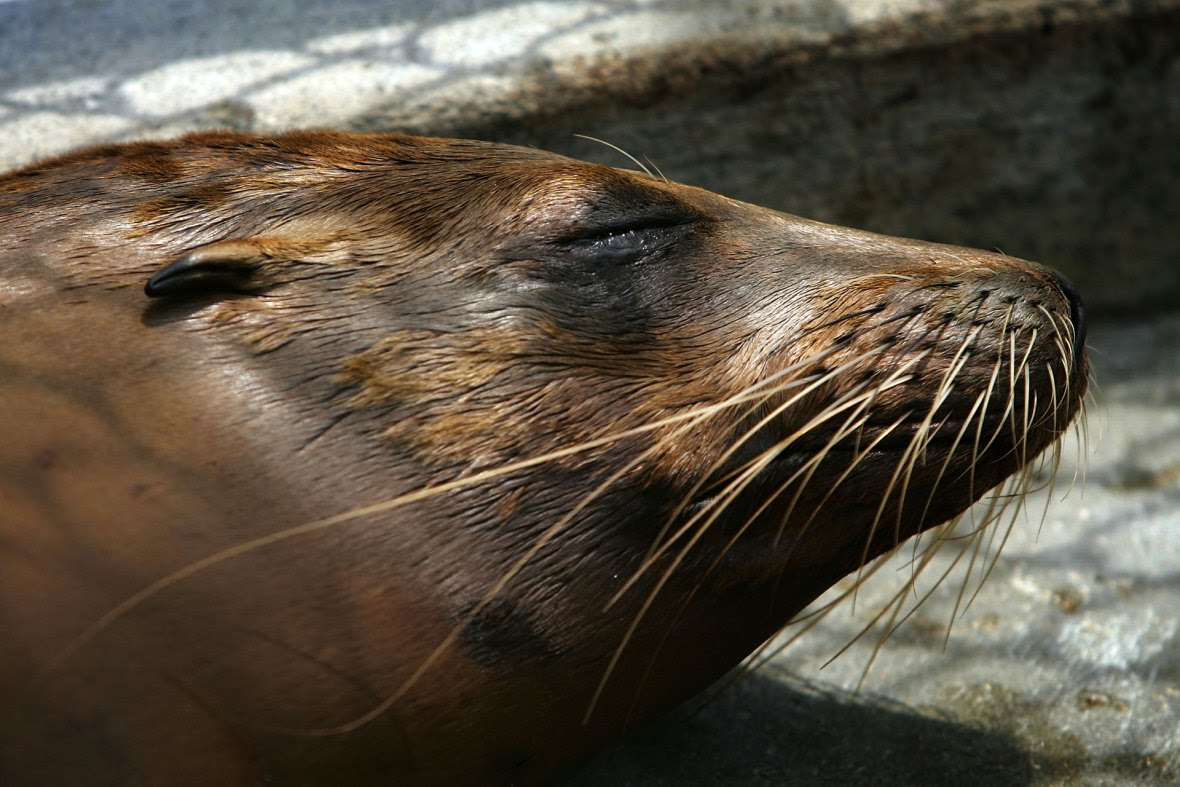
Tests on dead or dying marine wildlife show the animals were exposed to a vast bloom of toxic algae that flourished off the West Coast this summer, federal biologists said on Tuesday.Scientists detected domoic acid — a neurotoxin produced by marine algae and harmful to people, fish and marine life — in more than three dozen animals from Washington to California, including whales, dolphins, seabirds and seals. Several were found to have dangerous levels of the toxin, the National Oceanic and Atmospheric Administration (NOAA) said.Meanwhile, high levels of domoic acid continue to be found in shellfish.On Tuesday, California health officials advised people not to eat Dungeness or Rock crabs caught between the Oregon border and the southern Santa Barbara County line because tests showed dangerous levels of domoic acid.Oregon state officials also issued an advisory Tuesday for all recreationally caught crab along the southern Oregon coast, from south of Coos Bay to California. Officials warned people to remove the viscera, or guts, before eating the crab meat.Last month, Washington shellfish managers postponed the fall start of razor clam digging on ocean beaches and all razor clamming remains closed along the entire Oregon coast because of high level of domoic acid.The toxic algae bloom emerged last spring and flourished during the summer amid unusually warm Pacific Ocean temperatures. It was the largest and most widespread ever recorded on the West Coast and shut down lucrative fisheries, according to NOAA.Sea lions in California commonly experienced seizures, a common sign of domoic acid poisoning, during harmful algae blooms along that state’s coast.But this was the first year that such harmful effects were documented as far north as Washington state, said Kathi Lefebvre, a research biologist with the NOAA’s Northwest Fisheries Science Center in Seattle.“My biggest concern is — what does the future hold?” she asked.Domoic acid accumulates in anchovies, sardines and other small fish as well as shellfish that eat the algae. Marine mammals and fish-eating birds in turn can get sick from eating the contaminated fish. In people, it can trigger amnesic shellfish poisoning, which can cause permanent loss of short-term memory in severe cases.Health officials stress that seafood bought in stores is still safe to eat because it is regularly tested.Researchers said the number of animals found exposed to domoic acid may be a small fraction of those affected since many others don’t wash ashore or aren’t found.
Read the original post: http://ww2.kqed.org/
Emergency Crab Closure Recommended
FOR IMMEDIATE RELEASE - November 4, 2015
Emergency Crab Closure RecommendedCommission to Meet ThursdayThe California Department of Public Health (CDPH) issued a health advisory warning individuals to avoid eating rock and Dungeness crab due to the detection of high levels of domoic acid. The advisory was followed by a recommendation from the Office of Health Hazard Assessment (OEHHA) to the California Fish and Game Commission and the California Department of Fish and Wildlife (CDFW) to delay the start of the Dungeness crab season and close the rock crab fishery. These actions would apply to each fishery from the Oregon border to the southern Santa Barbara County line.The OEHHA recommendation has prompted an emergency meeting of the Commission, which will take place at 8 a.m. on Thursday, Nov. 5 (agenda and meeting information). At that time, the Commission will consider voting to delay the opening of the recreational Dungeness crab fishery. The recreational Dungeness crab season is currently scheduled to start Saturday, Nov. 7.Also based on the recommendation from OEHHA, CDFW will act on its authority to delay the start of the commercial Dungeness crab season. The commercial Dungeness crab season is currently scheduled to start Sunday, Nov. 15 in most of the state.Similar action will be considered by the Commission and CDFW to close the recreational and commercial rock crab fisheries in the affected area. Both recreational and commercial rock crab seasons are open all year."These are incredibly important fisheries to our coastal economies and fresh crab is highly anticipated and widely enjoyed this time of year. Of course, delaying or closing the season is disappointing," said CDFW Marine Regional Manager Craig Shuman. "But public health and safety is our top priority."CDFW, along with the OEHHA and CDPH, has been actively testing crabs since early September. OEHHA announced today that consumption of Dungeness and rock crabs is likely to pose a significant human health risk as a result of high levels of domoic acid. CDFW will continue to coordinate with OEHHA and CDPH to test domoic acid levels in crab along the coast to determine when the fisheries can safely be opened.Domoic acid is a potent neurotoxin that can accumulate in shellfish, other invertebrates and sometimes fish. It causes illness and can cause death in a variety of birds and marine mammals that consume affected organisms. At low levels, domoic acid exposure can cause nausea, diarrhea and dizziness in humans. At higher levels, it can cause persistent short-term memory loss, seizures, and can in some cases be fatal.Domoic acid is produced from some species of the marine diatom Pseudo-nitzschia. Currently, a massive toxic bloom of Pseudo-nitzschia has developed, significantly impacting marine life along California's coast. State scientists have been testing crab from eight fishing ports from Morro Bay to Crescent City, and have determined that the neurotoxin has spread throughout the fishery grounds.Algal blooms are common, but this one is particularly large and persistent. Warmer ocean water temperatures associated with the El Niño event California is experiencing is likely a major contributing factor to the size and persistence of this bloom.
# # #

Hilborn Says Newsweek Article “May Set a New Record for Factual Errors”
— Posted with permission of SEAFOODNEWS.COM. Please do not republish without their permission. —
Copyright © 2015 Seafoodnews.com

November 3, 2015Dr. Ray Hilborn, Professor in the School of Aquatic and Fishery Sciences at the University of Washington, takes issue with Newsweek’s August 9, 2015 article “Our Taste for ‘Aquatic Bushmeat’ Is Killing the Sea” and its bleak picture of the state of worldwide seafood.The article quotes Dr. Sylvia Earle, a former chief scientist at NOAA and now a National Geographic explorer-in-residence.The article incorrectly claimed that 90 percent of global stocks had been removed in the last half-century and that 90 percent of the worlds stocks were unsustainably harvested. The latter statement was corrected to 29 percent after CFOOD staff pointed out the error.CFOOD is a coalition of fisheries scientists from around the world who are correcting inaccuracies about stock abundance, management measures, and global ocean status. They back up their corrections with scientific data. Their website cfooduw.org lists myths “that won’t go away” and corrects them. For example, there are summaries of global stock assessments that show that stocks will not collapse by 2048, 70 percent of the world’s fish are not overfished, and we are not fishing down the food chain, among others.Newsweek writer Douglas Main referred to a 2003 report that estimated large fish populations (three species of tuna) had crashed worldwide based primarily on catch per unit of effort, now considered a biased metric to gauge abundance.The 2003 report was repeatedly refuted in subsequent scientific papers. By 2011, a correct estimate of 28.8 percent of fish stocks were considered fished at a biologically unsustainable level.“The graph below shows the trend in the number of stocks overfished according to the Food and Agriculture Organization of the United Nations,” wrote Hilborn. It shows that after rising steeply between 1970 and 1990, the rate of increase in overfishing rapidly declined, and total overfishing is now stands at 28.8% of global stocks.
 Hilborn pointed out that Newsweek’s article repeated the often rebutted statement that 90 percent of the large fish of the ocean were gone by 1980.“Yet again the author and Dr. Earle don’t seem to have read the scientific literature or have conducted any due diligence with respect to the facts in the article. Certainly those stocks declined from 1950 to 2005 but they were mostly not overfished and the declines were a natural part of newly developing fisheries," says Hilborn.“In fact, in many places of the world overfishing is disappearing and stocks are increasing. Cod in most of the North Atlantic are coming back, and Atlantic bluefin tuna is increasing rapidly.“The idea that on the whole global fisheries are not sustainably managed is out and out wrong,” Hillborn wrote. “In many places such as North America, Australia, New Zealand, Iceland, and Norway fisheries are sustainably managed.”Overfishing that has occurred is now declining in many countries including the European Union members, Chile, Peru, South African, Japan and Argentina.“Certainly there are many fisheries in the world that need better management, but we must understand where and why some stocks are overfished and this requires good science,” Hilborn said.Earle admonished people who don’t think about what kind of fish they eat or where it is from. “This kind of traceability is hard to achieve,” Hilborn points out, especially in areas where regulations are lax and fishing is strong, such as parts of Asia and Africa.“Dr. Earle is an advocate for minimizing human impacts on the ocean but and has frequently argued that we should not fish at all. This is despite the fact that fish provide essential nutrition and employment for many of the world’s poorest people.“The challenge is to assure that all of the worlds fisheries are sustainable and totally incorrect statements are no help in achieving this goal,” Hilborn said.
Subscribe to SEAFOODNEWS.COM
California’s Dungeness crab season start in doubt due to toxic algae offshore

With less than a week to go before sport anglers can begin setting traps for Dungeness crab, a persistent bloom of toxic red algae off the Pacific Coast is threatening to disrupt the start of the catch and one of California’s most valuable fisheries.State officials are awaiting test results they hope will come back by midweek before deciding if they will delay the Nov. 7 recreational start, as well as commercial seasons set to begin a week later, Fish and Wildlife personnel said.Concern about a powerful neurotoxin called domoic acid produced by certain marine algae is driving the deliberations in California and in other regions, including Washington state, where much of the Dungeness crab fishery was closed through the summer because of high levels of domoic acid found in crustaceans there.In California, absent current test results to evaluate, “everything kind of is up in the air right now,” state Fish and Wildlife Department spokeswoman Jordan Traverso said Friday.Overall, algae blooms that peaked in late summer off the California coast are reported to be diminishing, according to Pete Kalvass, senior environmental scientist with state Fish and Wildlife.But domoic acid levels of even 21 parts per million in crab meat are considered potentially dangerous, Traverso said.“We don’t know what the next step is until we get results,” said Christy Juhasz, an environmental scientist with the agency.Barring a delay, the recreational crabbing season will start Saturday, Nov. 7, and can be expected to draw thousands of eager fishermen to the North Coast for what’s become an increasingly popular undertaking, spawning traditions that bring family and friends together, filling campgrounds, boat ramps and bays.Campsites for the crab opener generally are booked months in advance in anticipation of the first-day scrum.“We’re busy in the summer, and it used to be just the summer that we had the most interest,” said Willy Vogler, co-owner of Lawson’s Landing on Tomales Bay. “Then, in the last decade or so, November has become like another summer, and it’s primarily due to the Dungeness crab season opening up. … Losing the crab would be bad.”
Read the original post: www.pressdemocrat.com/
New Report Shows Value of US Fish Landings Strong - Fisheries of the United States 2014
 October 29, 2015
Greetings!As we close out National Seafood Month this week, NOAA Fisheries released the Fisheries of the U.S. Report for 2014 today.Each year, we compile key fisheries statistics from the previous year into an annual snapshot documenting fishing's importance to the nation. Inside the 2014 report, you'll find landings totals for both domestic commercial and recreational fishing by species. This information allows us to track important indicators such as annual seafood consumption and the productivity of top fishing ports.Here are a few highlights from the report:• U.S. commercial fishermen landed 9.5 billion pounds of seafood valued at $5.4 billion in 2014.• There were strong landings of 3.1 billion pounds for the nation's largest commercial fishery, walleye pollock, valued at $400 million.• Dutch Harbor, Alaska, and New Bedford, Massachusetts, continue to dominate the list of top ports driven by landings of pollock for Alaska and sea scallops in Massachusetts.• U.S. marine and freshwater aquaculture production was valued at $1.4 billion, about one-quarter the value of the nation's commercial wild catch.• The five highest value commercial species categories were crabs ($686 million), shrimp ($681 million), lobster ($625 million), salmon ($617 million), and scallops ($428 million).In our recreational fisheries:• 10.4 million anglers took 68 million trips in 2014.• These recreational anglers caught 392 million fish, and released sixty percent of those caught.• The total harvest was estimated at 155 million fish weighing 186 million pounds.• The top five U.S. species ranked by pounds landed were striped bass, bluefish, yellowfin tuna, mahi mahi, and summer flounder.We have also posted Fisheries Economics of the United States for 2013. The report highlights the positive far-reaching economic impact of the seafood and recreational fisheries industries on the U.S. economy. The 2014 version of Fisheries Economics of the United States will be released within the next few months.Fisheries of the United States 2014 and Fisheries Economics of the United States 2013 are available on our website.Warm Regards,Laurel BryantChief, External AffairsNOAA Fisheries CommunicationsLaurel.Bryant@noaa.govwww.nmfs.noaa.gov
El Niño: Californians urged to buy flood insurance even if they're not near water
With the strongest El Niño conditions in nearly 20 years already underway in the Pacific Ocean and chances increasing for heavy storms this winter, federal emergency officials on Friday urged Californians to buy flood insurance -- even those who don't live near creeks or rivers."We encourage everyone to take the threat seriously," said Roy Wright, a deputy associate administrator at the Federal Emergency Management Agency in Washington, D.C. "If there ever was a time to buy flood insurance, this is that time."Since 1978 in California, 37 percent of all flood insurance claims have come as a result of just two winters, 1982-83 and 1997-98 -- the last two times that strong El Niño conditions similar to this year's have occurred. In both of those winters, pounding rainfall caused flooding, mudslides and other damage across the state.Many property owners who live in "high hazard" areas on flood maps that FEMA publishes are required to buy flood insurance as a condition of receiving a mortgage loan. But because there are large numbers of renters and people who have paid off their mortgages living near rivers, creeks and shorelines, only 30 to 50 percent of people living in high hazard areas nationwide have flood insurance, Wright said.Most homeowner's insurance policies cover damage if a tree falls through a roof or storms cause other harm, such as blowing patio furniture through a window. But they usually do not cover the damage from flood waters.Insurance experts and FEMA officials, who spoke at a midmorning news conference, said that people who do not live in flood-prone areas can still be at risk for flooding during major, sustained storms. That can happen when storm drains back up and flood neighborhoods, or water runs down hillsides and into homes.Forecasters say that January, February and March are expected to get the brunt of this winter's heavy rainfall across California. There is a 30-day waiting period for new flood insurance policies to go into effect, Wright said Friday.California's current four-year drought, and the nearly 20 years that have passed since the state experienced punishing winter rains, have made many residents downplay or forget that wet winters historically have caused major destruction and fatalities."People always say 'I never thought this would happen to me,'" said Nancy Kincaid, a spokeswoman for the California Department of Insurance. "But if it does, are you prepared to recover without insurance? It can be thousands, or even hundreds of thousands of dollars."Flood insurance policies for people in high-risk areas can cost $1,000 or a more a year. Policies for people outside those high-risk areas, which are called "preferred risk" policies, are cheaper and can range from about $140 to $500 a year, Wright said.

Read the original post: http://www.mercurynews.com/
Crab fishermen volunteer to protect tangled whales

It’s an increasingly common site along the West Coast: a 50-foot-long whale breaking the surface of the water, hundreds of feet of fishing gear wrapped around its torso and fins, cutting into its skin and trailing behind it. If the whale is lucky, a whale entanglement team will find it in time and successfully free it from the heavy equipment. If the whale is unlucky, it may succumb to infection, become too tired to feed, or drown.A seemingly unlikely ally has emerged in the fight to protect the whales of the West: the fishermen themselves. On Tuesday, Oct. 20, The Nature Conservancy and National Oceanic and Atmospheric Administration held meetings in three locations along the California coast to train fishermen to be first-responders for whale entanglement. Almost 100 crab fishermen attended the voluntary trainings – nearly a third of California’s crab fleet.More West Coast whales were caught in fishing gear in 2014 than any other year, according to reports by NOAA. 2015 is on course to break that record, and the Dungeness crab season has yet to begin.No one knows why reports of entanglements have increased so rapidly.“I don’t know anyone who has ever seen a whale caught up in gear, even the old-timers,” said Capt. Geoff Bettencourt, a fourth-generation commercial crab fishermen based in Half Moon Bay who attended the training. “But now it’s all over the news. It seems rampant.”One reason might be the dramatic increase in humpback whale populations, suggested Tom Dempsey, senior Fisheries Project Director at The Nature Conservancy. Another could be changes in whale behavior. Whales seem to be staying in California longer and spending more time close to shore, where most crabbing takes place. But this may not be the full picture.According to Dempsey, there’s not a lot of data to work with. It’s unclear what types of gear are most likely to harm whales, and the areas with the most reports might not represent where the whales are being entangled.Dempsey hopes the fishermen can help shed some light on the mystery. “Nearly 100 fishermen participated in our training. Collectively, they log thousands of sea days annually.”Not only will crab fishermen help researchers understand where and how the whales are being injured, they can help whale entanglement teams locate and rescue whales, acting as front-line triage. At the training, fishermen were taught to document and evaluate the condition of entangled whales, and taught to correctly report their locations to rescue teams.If the pilot program is a success, Dempsey hopes to hold more trainings. Eventually, fishermen may be taught to tag entangled whales with satellite and telemetry transmitters. This would help entanglement networks locate and rescue whales more easily.Dempsey said the response from fishermen has been overwhelming. “Usually on sensitive issues like this, everyone retreats to their different sides and there isn’t a lot of collaboration. This has been the opposite. The industry has stepped forward and really wants to be a part of the solution.”Bettencourt wasn’t surprised by the fishing industry’s response. “People think that all a fisherman cares about is catching fish, and that’s the farthest thing from the truth. If we mess up the ocean, our families suffer. We lose our livelihood. We lose everything. We want to see it healthy more than anyone.”
Read the original post: http://www.thecalifornian.com/story/news/my-planet/2015/10/23/crab-fishermen-volunteer-protect-tangled-whales/74489382/
Ray Hilborn: NGO Approach to Seafood Sustainability has lost its way, putting money over Science
— Posted with permission of SEAFOODNEWS.COM. Please do not republish without their permission. —
Copyright © 2015 Seafoodnews.com
SEAFOODNEWS.COM by Ray Hilborn October 26, 2015
Where is the science in seafood sustainability and certification?It is about money and values – science has been largely lost.
GSSI is intended to provide an agreed standard for the wide range of certification and seafood labeling schemes. As their web site says “GSSI is a global platform and partnership of seafood companies, NGOs, experts, governmental and intergovernmental organizations working towards more sustainable seafood for everyone.” So who is right in this case, does the GSSI benchmarking tool tell you if a fishery is sustainable?At its core, seafood sustainability is about the ability to produce food from the sea in the long term. Are the fishery and its management system operated in such a way that our grandchildren can still enjoy the same production from the fishery (subject to the constraints of external factors such as climate change) as we do today?The Food and Agriculture Organization (FAO) of the United Nations, whose objective is food security, has been a big supporter of GSSI. For FAO, sustainability is about continued food production. During the 1990s when overfishing in developed countries was at its height, many retailers supported seafood certification because they wanted to have products to sell in the future … again a focus on food sustainability.However, environmental NGOs such as WWF are interested less in food sustainability, and more in reducing the environmental impacts of fishing, whether that be catch of non-target species like sharks, or impacts of fishing gear on the seafloor. Consequently, WWF has been a strong supporter of the Marine Stewardship Council (MSC), which is the leading certification scheme for sustainable fisheries. The MSC standard covers much more than sustainable food production and sets a high bar for environmental impacts of fishing. Yet environmental NGOs, including some national chapters of WWF, reject MSC certification because they feel the environmental standards in MSC are not high enough.Due to the support of a broad range of diverse stakeholders, GSSI is a potential challenger to the MSC as the premier standard of what fish species are sustainably fished. If the GSSI standards are widely accepted, competitors to MSC that have a lower standard may be accepted by retailers as defining sustainability. Currently, consumer and retailers face a broad range of conflicting seafood advice. Once the criteria moves beyond just the sustainability of the fishery to include environmental impacts, things become confusing as there are so many different types of impacts with no consensus on which ones are more important than others. This is where fisheries certification moves from the arena of science, to one of values.For consumers and retailers, all the conflicting seafood advice is confusing. Take pollock from Alaska, the largest fishery in the US. This fishery is MSC certified, yet the Monterey Bay Aquarium Seafood Watch does not rate it as a top choice, but as a “good alternative.” Greenpeace puts pollock on its red list.Equally interesting is the conflict within the Monterey Bay Aquarium’s Seafood Watch itself. Skipjack tuna is one of the largest fisheries in the world and provides most of the world’s canned tuna. Skipjack from the western Pacific are red (Avoid), yellow (Good Alternative) and green (Best Choice) on the Seafood Watch guide, depending on how they are caught. Purse seine fishing has by-catch of many species and is thus red, while pole-and-line fishing has less by-catch and is green. However, purse seining has a much lower carbon footprint than pole-and-line fishing. Seafood Watch is valuing by-catch more than carbon footprint.There is a major role for science in seafood sustainability. Science can determine if the management of a fishery will lead to long-term sustainability of food production. Science can also evaluate the environmental impacts of a fishery. However, science cannot tell you what environmental impacts are valued – that is a question of individual choice or public policy.So where does this leave consumers, retailers and the rest of us interested in fish as food?The answer is confusing and will likely remain so. GSSI was seen as a hope to sort out the conflicts in seafood labelling – given the WWF response it doesn’t seem likely it will do so.The most interesting development in seafood sustainability is the force driving certification, and — spoiler alert — it isn’t consumers. Not too many people buy their fish based on sustainability ratings. Retailers, like your neighborhood Whole Foods, Costco or Safeway, do not want the media on their backs or an environmental NGO picketing their store for selling unsustainably harvested fish; they would rather be seen as supporting sustainable fishing to avoid negative press. They consider seafood certification that is backed by key NGOs like WWF as their protection. The next logical step for retailers is formal partnership agreements with the relevant NGO to advise them on what fish products to sell and to pay for this service.This is a dangerous development because the seafood certification turned partnership becomes a secure funding source for the NGO. Tim Wilson, in his 2012 paper, called this relationship between “friendly” NGOs that provide cover from “hostile” NGOs that might picket a retailer “naked extortion.” If, however, initiatives like GSSI were to be widely accepted, those steady sources of funds will dry up.Moreover, it is in the nature of NGOs to raise money to fund their activities; alarmist appeals to stop fisheries collapses continue to bring in the big bucks. News of fisheries successes might, at best, raise an indifferent, “meh.”I know of many private conversations where quite reasonable NGO staff admit the need to find new crises to keep donations flowing. It’s no wonder then, that no matter how well fisheries are actually performing, the bar must be raised again and again to maintain the story that fisheries are failing to meet the ever shape-shifting sustainability standards.In the immortal words of Deep Throat — Follow the money! Science, poor beggar, has largely been lost.
Subscribe to Seafoodnews.com