Massive Fish Farm Proposed Off San Diego’s Coast

“There are some big guys in there. There they come,” he said. “That’s a big fish right there.”I ask if he has names for them.“I try not to have names for things I eat,” he said.Kent won’t be eating these fish, but he hopes we’ll all be chowing down on their offspring in a few years.Kent is president and CEO of the Hubbs-SeaWorld Research Institute, a research nonprofit partially funded by SeaWorld. Hubbs-SeaWorld is partnering with a private investment firm to create the largest fish farm in America.The proposed Rose Canyon Fisheries aquaculture project would be built 4 miles off San Diego's coast. It could have a footprint on the ocean floor that’s slightly smaller than Balboa Park, and could produce 11 million pounds of yellowtail and sea bass each year.Kent said this country needs the project because 91 percent of its seafood is imported, and countries like China that produce a lot of fish are now keeping more for themselves.“The price of seafood is going up higher and higher for people like us who have to import it,” he said. “So the big advantage we have over those other supplies is from the fact that we can grow it locally.”But some environmentalists equate it to a large industrial farm.

How big is it?
Rose Canyon Fisheries would consist of 48 cages, each about 11,000 cubic meters, or 4.4 olympic swimming pools.

The cages would be divided into two grids that together cover an area about the same size as the parking lot around Qualcomm stadium.Anchor lines would run from the cages to the bottom of the ocean. Those lines extend out, so the project’s footprint on the ocean floor would cover about 1.3 square miles.The project would span the waters from Sunset Cliffs to Pacific Beach. Its cages could have poles that extend 16 feet above the water, but Kent said we won’t see them from shore. He has computer modeling that shows the cages will be below the horizon.To test that out, I did some trigonometry. My calculations showed if you’re lying on the ground at the ocean’s edge, you’d see the top third of a 16-foot pole. If you’re standing up, you could see more.Environmental group San Diego Coastkeeper is concerned about the scale of the project. They took out their boat 4 miles off of Ocean Beach and held up a pole. I went to Sunset Cliffs and looked for it.The boat was visible, but looked like a small dot on the horizon. So passersby could maybe see a grid of 42 poles, but they also might not notice them.
Environmental concerns
Matt O’Malley, a lawyer with San Diego Coastkeeper, also took me out on the boat to the spot where Rose Canyon Fisheries would go. After 45 minutes of riding through very choppy waters, he cut the engine.“You come out to a place like this, you can see how quiet, how pristine, how beautiful it is,” he said. Then he looked at the houses on shore.“You just know that some of these people are going to be out here looking at this,” he said.But O’Malley’s problems don’t end with beach homes’ views.“We're talking about putting a floating factory farm right off the coast of San Diego,” he said.

O’Malley points out 11 million pounds of fish would create a lot of, well, fish poop, and said that waste could change the chemistry in the water below the farm and on the ocean floor, and could lead to algae blooms.He also worries fish could escape the cages and spread diseases or breed with wild populations, hurting genetic diversity. Plus, he worries seals and sea lions would be attracted to all of those caged fish and get entangled in nets and ropes, and that the farm could change whale migrations and wild fish behavior.Kent with the Hubbs-SeaWorld Research Institute doesn’t dispute calling the project an industrial farm, but doesn’t see that as a negative.“If people were to sit down to their breakfast and say, I'm not going to eat anything farmed, then it's going to be a pretty light breakfast,” he said.He said Rose Canyon Fisheries won’t hurt the environment. The project would use thick rope lines and plastic nets that won’t entangle marine mammals, he said. He also described computer modeling that shows the farm is in deep enough water to dilute the fish poop. The cages are designed so the fish won’t escape, he said, and even if they did they won’t have diseases to spread.As for the inbreeding concern, he said the farm’s fish would be offspring of wild fish and that the farmed fish would be harvested before they breed with each other.“You can create a brood stock bred for faster growth, but before we go down that road, we want to make sure escapement isn’t a problem,” he said. “We want to be sure inbred fish isn’t a threat to wild population.”
New ground for federal agencies
Kent said he’d scale up Rose Canyon Fisheries slowly over eight years and monitor its environmental impacts along the way.But the project’s permits are for its full size. So if it’s approved, it could begin churning out more fish before the impacts are fully known.While there are other fish farms in the United States, this is the first on this scale that will be built in federal waters, said Diane Windham, the 3rd Regional Aquaculture Coordinator at the National Oceanic and Atmospheric Administration. That means federal agencies, not California, will have ultimate authority over it.
Document
Rose Canyon EPA Permit

The application for an EPA permit from Rose Canyon Fisheries.
But because Rose Canyon Fisheries is the first of its kind, there is not an established system for which agency will review its permits.“There was a fairly lengthy, I don’t want to say debate, but thoughtful discussion about who should lead this,” Windham said.It was recently decided that the Environmental Protection Agency will review whether the project follows the National Environmental Policy Act, with the National Oceanic and Atmospheric Administration (NOAA) adding input. The U.S. Army Corps of Engineers and the California Coastal Commission will also likely review portions of the project.“A lot of people would assume NOAA has permitting authority because aquaculture is one of our national priorities and have a lot of expertise,” Windham said. “Everyone is learning as they go. This project definitely brought the issue to light as to why doesn’t NOAA have permitting authority and how could that be achieved.”She said federal legislation could give her agency control over aquaculture projects. Right now the only proposed legislation regarding aquaculture is a bill from an Alaska congressman to ban fish farming entirely from federal waters.NOAA has long been pushing for aquaculture projects in federal waters because state regulations are generally stricter, said food journalist Paul Greenberg.The idea is to “go around state regulatory processes and speed up the process,” he said.O’Malley with Coastkeeper called the permitting system a “regulatory black hole” and said Coastkeeper will do whatever it can to ensure the project is vetted, including suing if necessary.“This is our backyard and this is a project that's massive, and has a lot of potential impact,” he said. “We think as a community, if we're going to be embarking on a project like this, we want to make damn sure the environment is protected in the process.”
Seafood swap
Kent hopes the project is approved soon to correct what he calls America’s seafood imbalance: exports to the U.S. are dwindling as the global population grows and more people eat fish.But the United States does produce some fish. It’s just that Americans don’t always want to eat it. While 91 percent of this country’s seafood is imported, about one-third of the seafood Americans catch is sold to other countries.

That’s because imported seafood is often cheaper, and Americans tend to prefer the taste of foreign fish to the fish native to our coasts, journalist Greenberg said. His book American Catch describes a seafood swap.“We tend to export stronger tasting things like mackerel, black cod, a lot of squid, and then we import shrimp, tilapia, neutral tasting things we can kind of deep fry and use in the American-palate-friendly sandwich,” he said.Aquaculture can help correct this imbalance, but “rather than trying to start up new and complicated ventures, first off let’s try to eat the fish we’ve already got,” Greenberg said.But aquaculture solves more global problems than Americans not liking fishy fish, Kent said.“There's 7 billion people on earth now and there's going to be 9 billion people in your lifetime, very soon,” he said. “How are we going to feed those extra 2 billion people?”One way to do that is through aquaculture, he said.
Read the original article: www.kpbs.org
Estero Bay, Pismo Beach are hotspots for shark bites on otters, study finds

Sea otters rest just inside the mouth of the Morro Bay harbor. JOE JOHNSTON — jjohnston@thetribunenews.com |Buy Photo
White sharks are taking a heavy toll on California’s sea otter population.A recent article for the journal Marine Mammal Science concluded that the Estero Bay and Pismo Beach areas are hotspots for shark bites on sea otters. The article written by four sea otter biologists noted an eightfold increase in shark bites along the sea otters’ southern range, which stretches from Cayucos to Point Conception.“Over the past 10 to 15 years the number of shark-bitten sea otters in California has increased with shark-related injuries becoming the most frequently identified primary cause of death in the assemblage of beach-cast carcasses,” the article concluded.White shark bites now are found on more than 50 percent of recovered otter carcasses, the study said.The trend is puzzling because sea otters are not considered a prey species for white sharks. The biologists concluded that the bites, while fatal, were exploratory only and the sharks did not intend to eat the otters.The trend is also troubling because it threatens to stop the recovery of sea otters in California, said Mike Harris, a sea otter biologist in Morro Bay with the state Department of Fish and Wildlife, who co-wrote the article.“It’s happening in the part of the otters’ range in the north and south where we need population growth,” he said. “Shark-bite mortality is essentially keeping the otter population from expanding into new habitat.”The trend shows no sign of letting up. On Monday, Harris recovered a shark-bitten sea otter carcass from Morro Strand State Beach, not far from where a shark bit a chunk out of a woman’s surfboard on Saturday.California sea otters range from Pigeon Point south of San Francisco in the north to Point Conception in the south. A census in 2014 put the otter population at 2,944, up five animals from the previous year.Sea otters are making a slow recovery after being hunted to near extinction for their luxurious fur during the 18th and 19th centuries. A small colony survived in Big Sur.In addition to shark bites, sea otters suffer from many other causes of death, including microbial toxins from polluted runoff and brain infections contracted from the feces of wild and domestic cats.The animals have been listed since 1977 as threatened under the federal Endangered Species Act. Their population would have to exceed 3,090 for three consecutive years to have them removed from the list.In the heart of their range, from Monterey to Cayucos, the otter population is stable and at the carrying capacity of their habitat. However, otter populations in the southern extent of their range have dropped by 3.3 percent in the past five years, according to the U.S. Geological Survey, which conducts an annual sea otter population count.The cause of this increased shark-bite mortality is unclear, Harris said. The most common explanation is that the population of white sharks is increasing, although there is little data to corroborate that.White sharks have been fully protected in California since 1994. The sharks feed primarily on seals, which are thriving. Northern elephant seals, sea lions and harbor seals have all experienced population increases in recent decades.“Their main prey base is very robust and growing,” Harris said.A 2014 study put the shark population at 2,400.The authors of the article studied the reports on 1,870 otter carcasses collected since 1985. A sharp increase in shark bites on otters began in 2003.
Read the original post: www.sanluisobispo.com
Restaurants Begin Pilot Program Dock to Dish in Southern California
— Posted with permission of SEAFOODNEWS.COM. Please do not republish without their permission. —
Copyright © 2015 Seafoodnews.com


Nearly 100 pounds of gleaming, fresh-caught California yellowtail and white sea bass arrived at Chef Michael Cimarusti's Los Angeles-based restaurant Providence on Wednesday morning. But this wasn't just another ho-hum seafood delivery.The pile of fish marks an important step toward a fundamentally different way that prominent chefs are beginning to source American seafood: the restaurant-supported fishery.Call it an evolutionary leap from community-supported-
Subscribe to SeafoodNews.com 1-781-861-1441John Sackton, Editor and Publisher
D.B. PLESCHNER: Recent Fishery Study Debunked by 1,400 Years of Data
September 2, 2015 — The following op-ed by D.B. Pleschner was submitted to Saving Seafood:In an article in International Business Times (August 5, 2015), Aditya Tejas quoted researcher Malin Pinsky in his recently published paper that claims smaller, faster-growing fish like sardines and anchovies are more vulnerable to population collapses than larger fish.“Climate variations or natural boom-and-bust cycles contribute to population fluctuation in small fast-growing fish,” Pinsky said, “but when they are not overfished, our data showed that their populations didn’t have any more tendency to collapse than other fish.” He called these findings counterintuitive because the opposite dynamic holds true on land: “Mice thrive while lions, tigers and elephants are endangered,” he said.While it’s common these days to blame the ocean’s woes on overfishing, the truth is Pinsky’s conclusions don’t paint a complete picture. Fortunately, we do have an accurate picture and it’s definitely better than the proverbial thousand words.The picture is a graph (adapted from Baumgartner et al in CalCOFI Reports 1992, attached) that shows sardine booms and busts for the past 1,400 years. The data were extracted from an anaerobic trench in the Santa Barbara Channel which correlated sardine and anchovy recoveries and collapses with oceanic cycles.

It’s important to note that most of sardine collapses in this timeframe occurred when there was virtually no commercial fishing. The best science now attributes great fluctuations and collapses experienced by sardines to be part of a natural cycle.“Pinsky has never been a terrestrial biologist or naturalist or he would have known that small rodents have boom and bust cycles brought about by combinations of environmental conditions and the mice’s early maturity and high fecundity rates,” says Dr. Richard Parrish, an expert in population dynamics now retired from the National Marine Fisheries Service, .“All fish stocks show boom and bust cycles in recruitment unrelated to fishing,” says Dr. Ray Hilborn, internationally respected fisheries scientist from the University of Washington. “Sardines in particular have been shown to have very great fluctuations and collapses long before commercial fishing. Fast growing, short-lived species will be much more likely to decline to a level called “collapse” when recruitment fluctuates because they are short lived — longer lived species won’t decline as much.”As a further poke in the eye to the truth, Pinsky cites sardines off the coast of Southern California as a species that has seen fluctuations for thousands of years, but “not at the levels that they’ve experienced in recent decades due to overfishing.”Again, this simply is not true.Since the fishery reopened in 1987, Pacific sardines have been perhaps the best-managed fishery in the world – the poster fish for effective ecosystem-based management. The current harvest control rule, updated to be even more precautionary in 2014, sets a strict harvest guideline that considers ocean conditions and automatically reduces the catch limit as the biomass declines.If the temperature is cold – which scientists believe hampers sardine recruitment – the harvest is reduced. And if the population size declines, both the harvest rate and the allowable catch will automatically decrease, and directed fishing will be stopped entirely when biomass declines below 150,000 mt.In fact, the current sardine harvest rule is actually more precautionary than the original rule it replaced. It does this by producing an average long-term population size at 75 percent of the unfished size, leaving even more fish in the water, vs. 67 percent in the original rule. The original harvest rule reduced the minimum harvest rate to 5 percent during cold periods. The present has a minimum rate of 0 percent during cold periods.Compare this to the 1940s and ’50s when the fishery harvest averaged 43 percent or more of the standing sardine stock with little regulatory oversight and no limit on the annual catch. This, coupled with unfavorable ocean conditions, culminated in the historic sardine fishery collapse that devastated Monterey’s Cannery Row.But that was nearly 70 years ago, not “recent decades.” Our current fishery harvest is less than a quarter of the rate observed during that historical sardine collapse.As a scientist, Pinsky should be aware of the complex, proactive management efforts that have been in place for decades to prevent overfishing in California and the west coast. He should also be aware of the data from Baumgartner that contradicts his faulty conclusions.D.B. Pleschner is executive director of the California Wetfish Producers Association, a nonprofit dedicated to research and to promote sustainable Wetfish resources.
Read the original post: www.savingseafood.org
Climate change will irreversibly force key ocean bacteria into overdrive

Amped-up bacteria
By breeding hundreds of generations of the bacteria over the course of nearly five years in high-carbon dioxide ocean conditions predicted for the year 2100, researchers found that increased ocean acidification evolved Tricho to work harder, producing 50 percent more nitrogen, and grow faster.The problem is that these amped-up bacteria can’t turn it off even when they are placed in conditions with less carbon dioxide. Further, the adaptation can’t be reversed over time — something not seen before by evolutionary biologists, and worrisome to marine biologists, according to David Hutchins, lead author of the study.“Losing the ability to regulate your growth rate is not a healthy thing,” said Hutchins, professor at the USC Dornsife College of Letters, Arts and Sciences. “The last thing you want is to be stuck with these high growth rates when there aren’t enough nutrients to go around. It’s a losing strategy in the struggle to survive.”Tricho needs phosphorous and iron, which also exist in the ocean in limited supply. With no way to regulate its growth, the turbo-boosted Tricho could burn through all of its available nutrients too quickly and abruptly die off, which would be catastrophic for all other life forms in the ocean that need the nitrogen it would have produced to survive.Some models predict that increasing ocean acidification will exacerbate the problem of nutrient scarcity by increasing stratification of the ocean — locking key nutrients away from the organisms that need them to survive.
What the future may hold
Hutchins is collaborating with Eric bbb of USC Dornsife and Mak Saito of WHOI to gain a better understanding of what the future ocean will look like, as it continues to be shaped by climate change. They were shocked by the discovery of an evolutionary change that appears to be permanent — something Hutchins described as “unprecedented.”“Tricho has been studied for ages. Nobody expected that it could do something so bizarre,” he said. “The evolutionary biologists are interested in it just to study this as a basic evolutionary principle.”The team is now studying the DNA of Tricho to try to find out how and why the irreversible evolution occurs. Earlier this year, research led by Webb found that the organism’s DNA inexplicably contains elements that are usually only seen in higher life forms.“Our results in this and the aforementioned study are truly surprising. Furthermore, they are giving us an improved view of how global climate change will impact Trichodesmium and the vital supplies of new nitrogen it provides to the rest of the marine food web in the future.” Webb said.The research appears in Nature Communications on Sept. 1.Hutchins, Webb and Saito collaborated with Nathan Walworth, Jasmine Gale and Fei-Xue Fu of USC; and Dawn Moran and Matthew McIlvin of WHOI. The work was funded by the National Science Foundation (grants OCE 1260490, OCE 1143760, OCE 1260233 and OCE OA 1220484); and the G.B. Moore Foundation (grants 3782 and 3934).
Read the original post: http://news.usc.edu
Monterey Bay National Marine Sanctuary counts its victories.
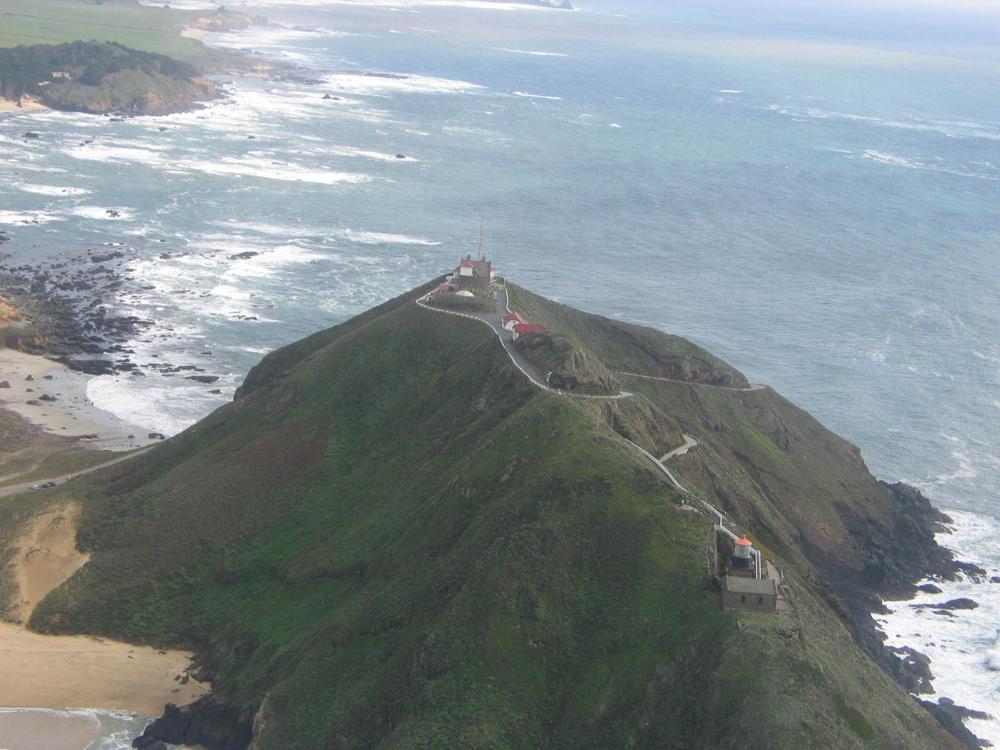
Nature shows so often follow the same script: The earth is amazing, but we humans are ruining it.Big Blue Live, a PBS/BBC production, flips that script. It toasts Monterey Bay as a conservation success, a case study of how science-based ocean management is allowing a highly degraded ocean habitat to rebound.That resilience will be on full, high-definition display when the show airs real-time footage of Monterey Bay sea life in the U.S. Aug. 31-Sept. 2.Monterey Bay National Marine Sanctuary (MBNMS), which is co-hosting with Monterey Bay Aquarium, is taking the occasion to count its victories since its 1992 designation, which brought with it a host of federal protections.The National Oceanic and Atmospheric Administration's latest status report on MBNMS includes some encouraging news, announced in a press release today. Among the highlights:- Populations of elephant seals, blue whales and gray whales are stable or increasing. The sanctuary now counts more than 30,000 resident elephant seals, which were once close to extinction. Humpback whale numbers have bounced back so well, the local sub-population is proposed for removal from the endangered species list.- Sea-floor habitats in and near the Davidson Seamount, an underwater mountain about 75 miles southwest of Monterey, are almost "pristine."- The kelp forests that shelter and feed many of Monterey Bay's marine creatures are "generally abundant and stable."- Abundant forage species are feeding both marine animals and people. Fishermen have landed more than a billion pounds of sardines, anchovies and squid since the sanctuary was designated 23 years ago. That includes a local squid harvest of 90 million pounds last year alone.- Brown pelicans made it off the federal endangered species list in 2009, rebounding from a low of less than 1,000 breeding pairs in the 1970s to almost 11,700 regional pairs in 2006.- Southern sea otters have bounced back from about 1,800 to 2,900 within the sanctuary since 1992. That's great for other kelp-forest species, since otters eat the sea urchins that mow down kelp.- Local beaches are cleaner, thanks to sewer system improvements and reduced stormwater runoff.The report, however, is not entirely rosy. Sewage spills and high coliform counts still occasionally pollute local beaches. Regulators are still finding contaminants in local waters. Marine animals are getting tangled in fishing gear and eating plastic litter, while sand mining continues to erode the Monterey Bay shoreline.And climate change continues to threaten the sea—especially ocean acidification, which happens when elevated CO2 levels from fossil fuel burning cause the ocean's pH to decline. That chemical shift is affecting the ability of some creatures to form or maintain their shells, which has ripple effects through the food web.The full report, according to NOAA, will be available online this fall.
Read the original post: http://m.montereycountyweekly.com
Ray Hilborn Says Recent Science Paper Makes Inflated Claim about Human Impacts on Marine Species
— Posted with permission of SEAFOODNEWS.COM. Please do not republish without their permission. —
Copyright © 2015 Seafoodnews.com
Ray says the authors made a mistake in only looking at individual predators and in not considering all predation on a given species. He says that when all predation is considered, the results reverse themselves, and that natural predators take a larger proportion of adult marine fish than humans do.His comment is below:Comment by Ray Hilborn, University of WashingtonThis paper claims that humans have a up to 14 times higher exploitation rate than natural predators. There is a basic flaw in the analysis which diminishes the validity of the conclusions the authors come to. First the calculated predation rate of natural predators will depend on how many predators you look at. Dozens or even hundreds of species may prey upon a given species, most of them taking a trivial fraction of the prey. If you find data only for the most important predators (the ones that take the most of the prey species) you will estimate a high predation rate, but if you find data for all the species that prey upon a species the median will be much much lower.In fact there are hundreds of potential predators for any species, most take none of the prey species, so if you had data for all of them you would say that the average predation rate was nearly zero for natural predators. Thus the more data on predation rate for individual species you can find, and the more you find predation data for trivial predators, the lower you will estimate “average” predation. However, if you look at the predators who take the most of the specific prey the fraction of the prey will be much higher and often more than humans.

The more important question is what is the total predation rate compared to the human exploitation rate? One has to read the Darimont paper carefully to realize they are talking about rates of individual predatory species, not rates of predators as a whole. For instance their abstract says “humans kill adult prey… at much higher median rates than other predators (up to 14 times higher). ” Thus they are comparing the rates of all other predatory species taken one at a time to that of humans. There may be natural predators who have a very high predation rate (higher than humans), but they are masked by the average of other predators with low rates. The clear implication is that we take more adults than do predators. Much of the media coverage interprets their results this way.This is absolutely not true as shown in the analysis below which shows that humans take about ½ as many adult fish as marine predators.

Chart: Ray HilbornTo compare the rates of fishing mortality to rates of natural mortality (almost all of which is from predation), I used the RAM Legacy Stock Assessment Data Base (www.ramlegacy.org) the same data base used by Dairmont et al. to obtain fishing mortality rates. I selected the 223 fish stocks for which we had both natural mortality and human exploitation rates, and plot the distribution of the two in the graph below. We find that fishing mortality on adult fish is on average roughly ½ of the predation rate --- not 14 times higher as the abstract of their paper would leave you to believe. Remember Dairmont were not looking at all of predation, but counting each predator as an individual data point. In aggregate predators take far more adult fish than do humans, but you would not understand that by reading the Dairmont paper.The authors conclude that argument that globally humans are unsustainable predators. This flies in the face of the fact that we have considerable empirical evidence that we can sustainably harvest fish and wildlife populations. The basic key to sustainable harvesting is keeping the fraction exploited at a level that can be sustained in the long term, and adjusting harvest up and down as populations fluctuate. The Food and Agriculture Organization of the United Nations provides the most comprehensive analysis of the status of global fisheries and estimates than about 30% of global fish stocks are overexploited – the other 70% are at levels of abundance that are generally considered sustainable.Many fisheries are evaluated by independent organizations like the Marine Stewardship Council and Monterey Bay Aquarium and classified as “sustainable” yet Dairmont and co-authors suggest that no fisheries are sustainably managed.As an example, sockeye salmon in Bristol Bay Alaska have been sustainably managed for over a century, have been evaluated as sustainable by every independent organization, and the key is limiting harvest so that enough fish reach the spawning grounds to replenish the species. In this case humans take about 2/3 of the returning adult salmon – a much higher fraction than the predators, but it is sustainable and stocks are at record abundance.Darimont and coauthors suggest we need to reduce exploitation pressure by as much as 10 fold. This may be true in some places but in the US we manage fisheries quite successfully. We agree with the authors that management is key to keeping healthy and sustainable populations of fish and wildlife. However, instead of “emulating natural predators” and decreasing human exploitation across the board, we need to work to use our knowledge to expand good management practices to more species and areas of the world.
Subscribe to seafoodnews.com
How Many Fish in the Sea? Genetic Testing Could Answer That
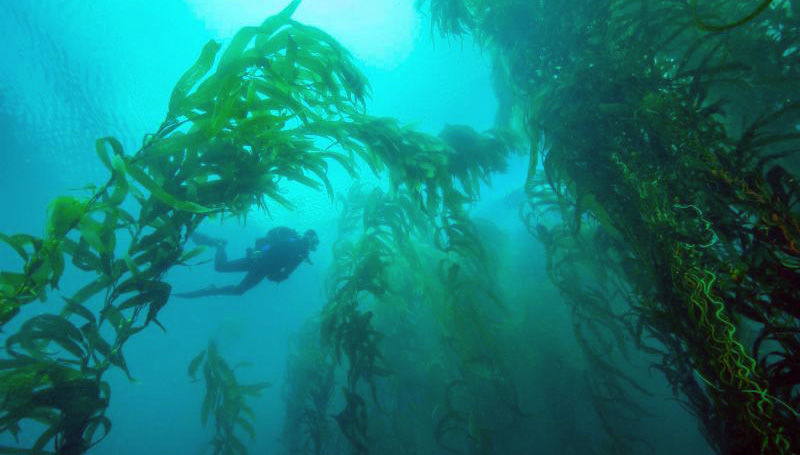
Advances in genetic testing have revolutionized everything from health care decisions to crime forensics. Now, the technology may help protect marine life off the California coast.In the waters of Monterey Bay, DNA sequencing is allowing biologists to study fish and whales without ever having seen them.Just a sample of seawater, the volume of a water bottle, is enough to reveal what marine life has been swimming through that part of the ocean. The technique could improve marine monitoring, where scientists track an ecosystem year after year to gauge how it’s doing.One Fish, Two FishTaking a marine census today requires hours of field time, either with scuba diving or boat trips.“It gets a little challenging because you’re floating, you’re swimming, you’re looking, you’re counting,” says diver Dan Abbott, unloading his scuba gear on a beach in Monterey.He’s holding a waterproof clipboard, on which he’s tallied all the fish and marine life he saw in a kelp forest just offshore.“About 150 fish in all. Pile perch, black perch, blue rockfish, kelp rockfish,” he says, just for a start. He’s diving with a team from Reef Check California, a group of volunteers that surveys this site twice a year.The group’s data help answer a question that’s key to California’s conservation efforts: are there more fish here now than there were eight years ago?That’s when this kelp forest became part of a massive experiment to restore marine life in California. It was set aside as a marine protected area, where there’s little or no fishing allowed.There are now more than a hundred protected areas up and down the coast, covering 16 percent of state waters. The idea is that marine life will slowly recover there, improving the ecosystem both inside and outside the boundaries of each area.The only way to know if these areas are working is through underwater surveys, repeated year after year. In 2013, biologists reported encouraging results in the protected areas off the Central Coast.Field surveys are expensive. The state supplied $16 million for monitoring studies, and the funding has already run out in some regions of the coast. Monitoring has continued, thanks to universities, foundations and volunteer groups.Studying the Ocean Without Getting Wet“It’s been amazing what we can detect in just a liter of seawater,” says Jesse Port, an environmental genomicist at the Center for Ocean Solutions at Stanford University.He points to a rack of one-liter Nalgene water bottles that he uses to take seawater samples from the kelp forests in Monterey Bay. The rest of the work happens in the lab with a technique known as “environmental DNA” or eDNA.“So all organisms shed their DNA,” he says. “Their skin, their scales, their waste – all of this gets into the water. You can think of it as a soup of genetic information.”Port filters the seawater to collect all the cells. Then, he weeds out the algae and plankton and sequences the DNA of all the vertebrates, like whales, seals, and fish.“We get, with the machine we’re using, 150 million sequence reads for a given sequence run,” he says, “and that’s a lot of information.”Those gigabytes of results require heavy data-crunching, but eventually, he ends up with a spreadsheet that tells him what organisms were found.The approach is possible because DNA sequencing has gotten so much cheaper. One sample costs just $1,500.“This was just not possible five, ten years ago,” Port says. “And sequencing technology is just going to get better, so this will probably get even cheaper.”Finding Turkey UnderwaterPort first ran DNA tests in one of the large tanks at the Monterey Bay Aquarium, which provided an easy test case because he knew exactly what was swimming there.But he got back results he didn’t quite believe. “Things like turkey,” he says. “We picked up chicken DNA in these tanks.”Turns out, poultry was in the feed some of the fish were getting. But it raised some big questions. How do you know whether the DNA comes from a fish or from something it ate miles away? Or how do you know the DNA didn’t float in on a current?Port is still working on the answers to these questions and he’s doing studies to ground truth his results, checking them against what scuba divers find. But if the technology proves itself in the ocean, it could revolutionize how marine monitoring is done.“You can cover such a larger area by taking water samples,” he says, “rather than having divers do that all themselves.”Paul Michel, the superintendent of the Monterey Bay National Marine Sanctuary, says they’re already using eDNA testing to help assess species diversity in the sanctuary.“Absolutely, we did DNA testing on a research cruise in May,” Michel says, “and at each stop on the way, we were taking water samples. We can compare the DNA results to other types of samples over time.”Eventually, it doesn’t even have to be humans taking those water samples.
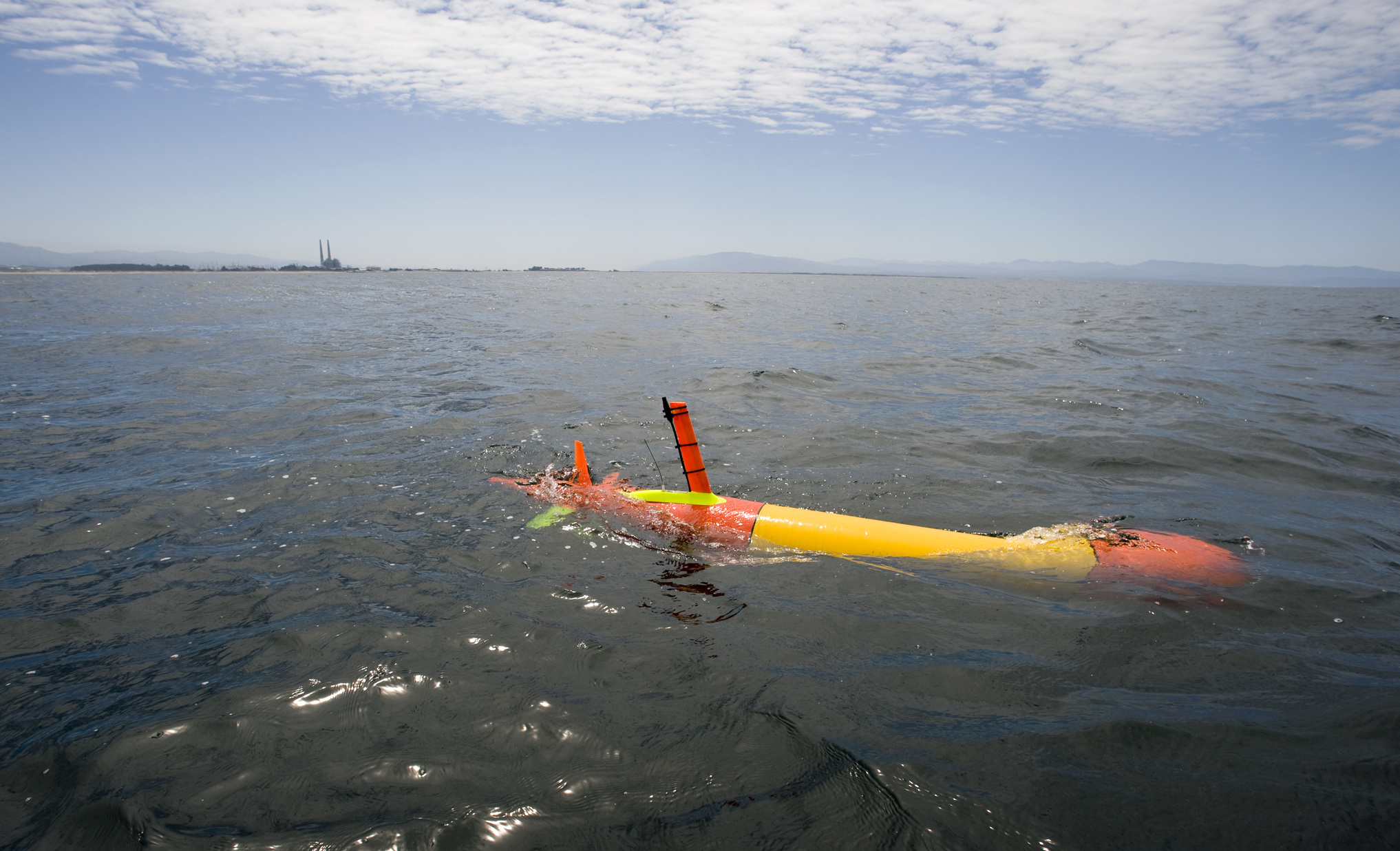
DNA Lab at Sea“What this is, is a microbiology lab that exists out in the ocean,” says Jim Birch of the Monterey Bay Aquarium Research Institute, pointing to a 10-foot yellow tube. It’s called a long-range AUV, or autonomous underwater vehicle.It looks like a torpedo, but it’s actually a robot, containing a miniature DNA lab called an Environmental Sample Processor.The robot cruises along underwater, taking samples and analyzing them onboard. Birch recently sent it out for a test run in Monterey Bay.“I was sitting in my living room with my computer open and there in front of me was the control panel for the AUV,” he says. “And I could direct it to go to a new place and it was just this surreal feeling.”When the AUV finds an organism it’s looking for, it surfaces and calls home, pinging a satellite or cell phone network with the data, and giving scientists an almost real-time snapshot of the ocean.Currently, it only tests for one thing at a time, like algae or plankton, and Birch says there’s more engineering work to be done before the AUV gains widespread use.“This is going to be transformative in oceanography,” he says. “You don’t have to be out there on a boat with a huge crew, spending all this money.”
A change that could help the state’s conservation funding go farther, ensuring California’s marine protected areas are working.
Read/Listen the original post: http://ww2.kqed.org